


Neighborhoods in the Universe: What is a Galaxy and Their Types?
- Mar 20
- 18 min read
Updated: Mar 21
If we imagine the universe as a city, then the galaxies in the universe are the neighborhoods. Stars, planets , black holes, and other celestial bodies are the residents of that neighborhood. Here's a definition of a galaxy you won't find anywhere else. Now, I want to get a little more serious and give you a detailed definition of a galaxy. Let's examine in detail what a galaxy is, how galaxies form, how they die, and what types of galaxies exist!
Contents
What is a galaxy?
First, let's learn what a galaxy is. A galaxy, or celestial island, is a massive structure in space held together by gravity, consisting of gas, dust, black holes, countless solar systems, billions of stars , and trillions of planets . This structure is usually elliptical or spiral in shape and can maintain its existence for billions of years.
The one-sentence answer to the question "What is a galaxy?" is: A massive structure containing objects in space, with a massive black hole at its very center.
Characteristics of Galaxies
If we were to list what we know about galaxies:
These are cosmic clusters that contain all the celestial bodies we know.
There are four main types: spiral, elliptical, lenticular, and irregular.
At their center lies a massive black hole.
All galaxies in the universe are pulled toward the Great Attractor.
Galaxies that continue to give birth to new stars continue to live.
Some galaxies emit galactic winds, which prolong the lifespan of the galaxy.
Large galaxies absorb smaller galaxies through collisions.
When two galaxies of the same size collide, a larger galaxy is formed.
What lies at the center of galaxies?
Have you ever looked at a picture of a galaxy? All galaxies have a bright center, and this brightness has made you wonder, "What's at the center of the galaxy?" At the center of galaxies is a supermassive black hole . These supermassive black holes are thought to be the result of chain collisions between stars and the merging of intermediate-mass black holes. Another theory suggests that a black hole, growing by devouring stars over billions of years, eventually becomes, or "shifts," to the center of the galaxy.
Do black holes play a key role in the formation of galaxies?
One theory suggests that the first black holes formed and gathered the developing galaxy cluster around them. However, the exact role of black holes in galaxy formation is still unknown. Some scientists propose that supermassive black holes play a role in the growth of galaxies by preventing too much gas from collapsing onto stars or by ejecting energy jets that shape their surroundings.

Does everything in the galaxy revolve around the central black hole?
The presence of a supermassive black hole at the center of a galaxy might lead us to believe that everything revolves around it, but this is incorrect. Everything in the galaxy revolves around the total mass at the center. For example, the Milky Way Galaxy is known to have a center several billion times the mass of the Sun, and these celestial bodies make a significant contribution to the mass at the center.
What would happen if the black hole at the center of a galaxy suddenly disappeared?
Generally, it doesn't have a huge impact because black holes aren't the only massive objects at the center of galaxies. However, the orbits of stars and gas clouds near the black hole can shift, leading to stellar collisions and supernovae in the inner circle. Also, since we're talking about a supermassive black hole, we need to consider the dispersal of the accretion disk. Because there's no longer gravity holding the accretion disk together , it disperses, releasing an incredible amount of radiation into the galaxy . As a result, the galaxy becomes brighter.
Beyond all of this, the long-term effects of a black hole's disappearance vary depending on what percentage of the central mass it constitutes.
Why doesn't the black hole at the center of galaxies swallow the galaxy?
The answer is very simple: Black holes aren't as successful at pulling things in as is commonly believed. Because a small black hole has a small radius, any celestial object passing near its event horizon will be directly torn apart because its tidal forces are so strong. Now consider a black hole at the center of a galaxy with a diameter of 24 million km. The wider the event horizon (diameter) of a black hole, the weaker its tidal pull becomes, and it exerts a gravitational pull on objects passing near it rather than tearing them apart. A star with sufficient mass will resist this pull and, rather than being swallowed, will begin to orbit around the black hole, using it as its center. Therefore, black holes at the centers of galaxies play more of a gravitational role than a destructive force.
Are Galaxies in Motion?

The position of the Big Attractive and the Milky Way.
Galaxies in the observable universe , including the Milky Way, are being pulled toward a point rather than orbiting around something. We call this phenomenon the "Great Attractor ." Unfortunately, we cannot directly observe the Great Attractor because it is located in the Avoidance Zone of the sky. The reason we cannot observe this region is that there are many stars, gas, and dust in that part of the Milky Way galaxy that obstruct the view.
How many galaxies are there in the universe?
The number of galaxies in the observable universe is estimated to be between 200 billion and 2 trillion (200,000,000,000 - 2,000,000,000,000). Scientists arrived at the 200 billion estimate by observing small sections of the universe and counting the galaxies within those sections. This counting method became a lower limit for the known galaxies in the universe. The 2 trillion estimate comes from 3D renderings of images from the Hubble Space Telescope and new mathematical models. Furthermore, if we accept the theory that the universe is infinite, the number of galaxies in the universe automatically becomes infinite.
How does a galaxy form?
In the moments following the Big Bang, waves formed in the universe. When a wave grew large enough, it eventually collapsed under its own gravity, creating the dark halo. You can think of the dark halo as a soil for the budding of galaxies . The collapse of waves brought matter together, forming a galaxy filament (cosmic web) surrounding the almost empty spaces . You can also think of cosmic webs as the bases of galaxies . Galaxies form along this web and accumulate in clusters where the web intersects . Accumulation takes the form of a cloud , and the material in the cloud begins to collapse toward the center due to gravity . The effect of the collapse compresses the gas clouds, and new stars form. The galaxy , still collapsing toward the center, begins to rotate and contract faster . Due to the contraction, the galaxy's rotation accelerates, and the nebular structure transforms into a disk. Meanwhile, stars begin to evolve and engulf the surrounding material, revealing the general outline of the galaxy . Over time, the galaxy establishes its own order and continues to form new stars until it dies.
How long does it take for a galaxy to form?
It takes at least hundreds of millions of years for a galaxy to form . We know that the GN-z11 galaxy formed 400 million years after the Big Bang.
Are new galaxies still forming in the universe?
Yes. Galaxies in the universe continue to collide, creating new galaxies.
Do galaxies form randomly?
No, the positions of galaxies in the universe are not random. The presence of dark matter has assigned them a position. This halo has ensured that each galaxy is in its proper position in space. Galaxies formed as a result of collisions also move according to the laws of gravity. Therefore, nothing in the universe is random; everything is connected in a chain.
How do galaxies die?
Galaxies begin to die when they stop forming new stars and their existing stars reach the end of their lifespan. Over time, galaxies deplete their gas and dust. In a gas-free environment, the necessary materials for the formation of new stars are absent, and the galaxy enters "menopause," meaning it can no longer provide the conditions necessary for new star formation. Once the old stars have completed their lifespans, the galaxy's time to die is near.
How many celestial bodies make up galaxy clusters?
Based on the Milky Way Galaxy, an average galaxy with a diameter of 100,000 light-years, a galaxy typically contains between 100 and 400 billion stars, 800 billion to 3.2 trillion planets, 800 billion to 1 trillion moons, and 100 million black holes. Of course, these figures are estimates for the Milky Way Galaxy. Larger galaxies undoubtedly contain even more celestial bodies.

Galaxy Classifications
In 1925, American astronomer Edwin Hubble developed a system to more easily distinguish galaxies because there are so many different types in the universe, and this classification is called the "Hubble system." In fact, many schemes exist for distinguishing galaxies, but the Hubble system is considered the main one because it is simpler. According to the Hubble system, there are three main types of galaxies: elliptical, spiral, and lenticular.
Arguing that the Hubble classification system was incomplete and lacked room for classifying certain galaxies, French astronomer Gérard de Vaucouleurs created the De Vaucouleurs system in 1959. This new scheme served as a supplement to the Hubble system, adding a new category to the three main classes of galaxies: Irregular galaxies.
Hubble and De Vaucouleurs' Galaxy Classification

A combined version of the diagrams by Edwin Hubble and De Vaucouleurs / Source
E0 - E7 Galaxies
This term is used for elliptical galaxies. An E0 galaxy is a perfectly circular structure and gradually stretches and contracts over time, eventually reaching the E7 class.
S0 Galaxies
This term is used for lenticular galaxies. They can be considered an intermediate class of galaxy, situated between elliptical and spiral galaxies. They are in the form of a large disk but lack spiral arms.
SAa-m Galaxies
It is used for spiral galaxies that do not have any bars. The letters a, b, c, d, and m at the end also indicate the density of the galaxy arms and the faintness in the center. The letter M is used for SA galaxies that are completely distorted and have lost their bulge.
SABa-m Galaxies
De Vaucouleurs added an intermediate class of galaxies : spiral galaxies with weak bars. The letters a, b, c, d, and m at the end are further indicated by the density of the galaxy arms and the faintness of the center. The letter M is used for SAB galaxies that are completely distorted and have lost their bulge.
SBa-m Galaxies
It is used for barred galaxies. The letters a, b, c, d, and m at the end also indicate the density of the galaxy arms and the faintness in the center. The letter M is used for SAB galaxies, which are completely distorted and have lost their bulge.
m Galaxies
Most m-class galaxies are actually Irr I galaxies in the Hubble classification. The term is used for irregular galaxies that have lost their shape. It is also the fourth major class of galaxies added by De Vaucouleurs.
dSph Galaxies
The last class that De Vaucouleurs added to the Hubble diagram. It is used for dwarf globular galaxies. It refers to small, low-luminosity galaxies with very little dust and an old star population.
Types of Galaxies
Now let's get to the question, "What are the different types of galaxies?" Galaxy types are classified according to the shape and characteristics of the galaxy. Here are all the types of galaxies you need to know:
Spiral Galaxy
The Striped Spiral Galaxy
Ringed Galaxy
Lenticular Galaxy
Elliptical Galaxy
Dwarf Galaxy
Irregular Galaxy
Starburst Galaxy
Extremely Disorganized Galaxy
Spiral Galaxy
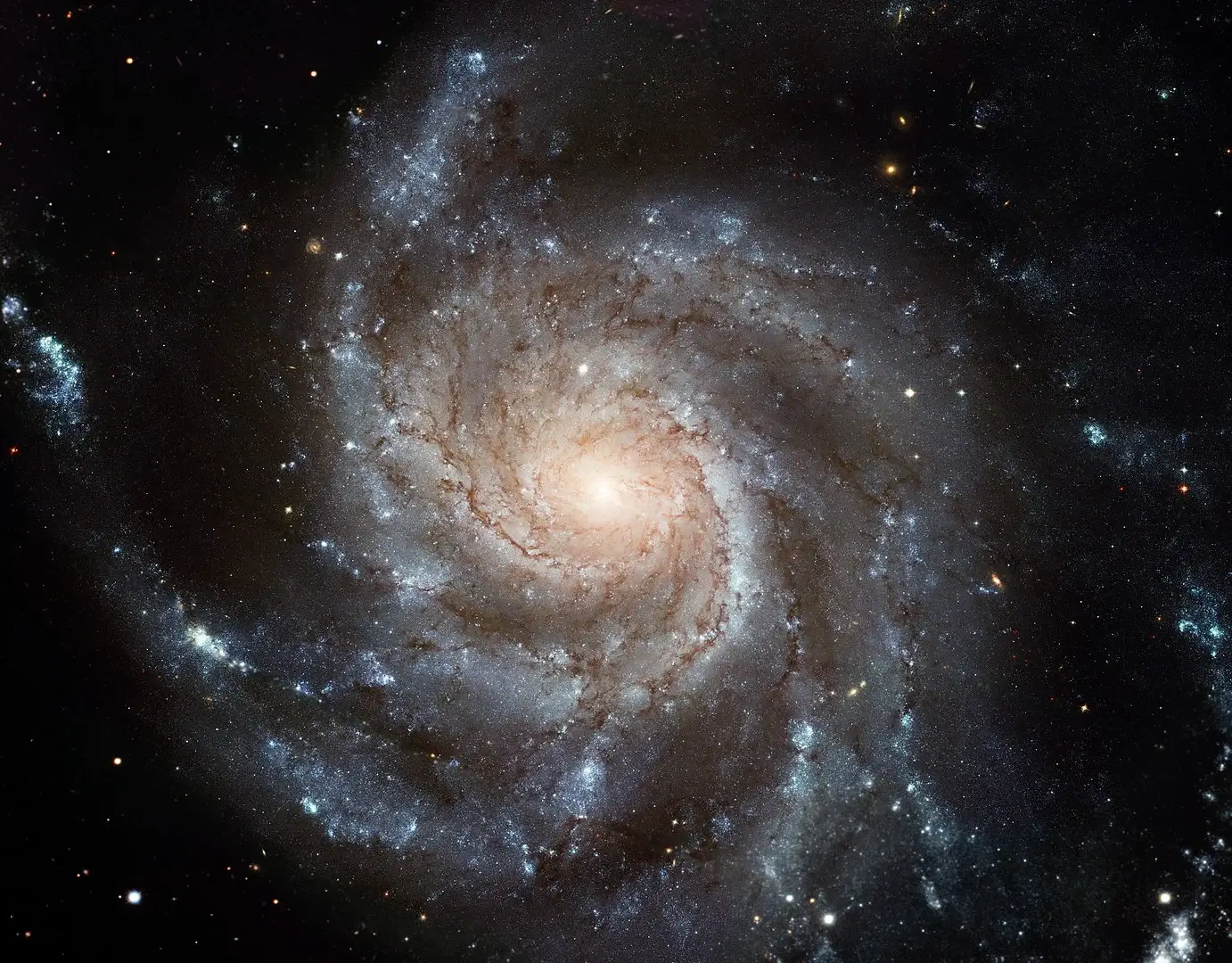
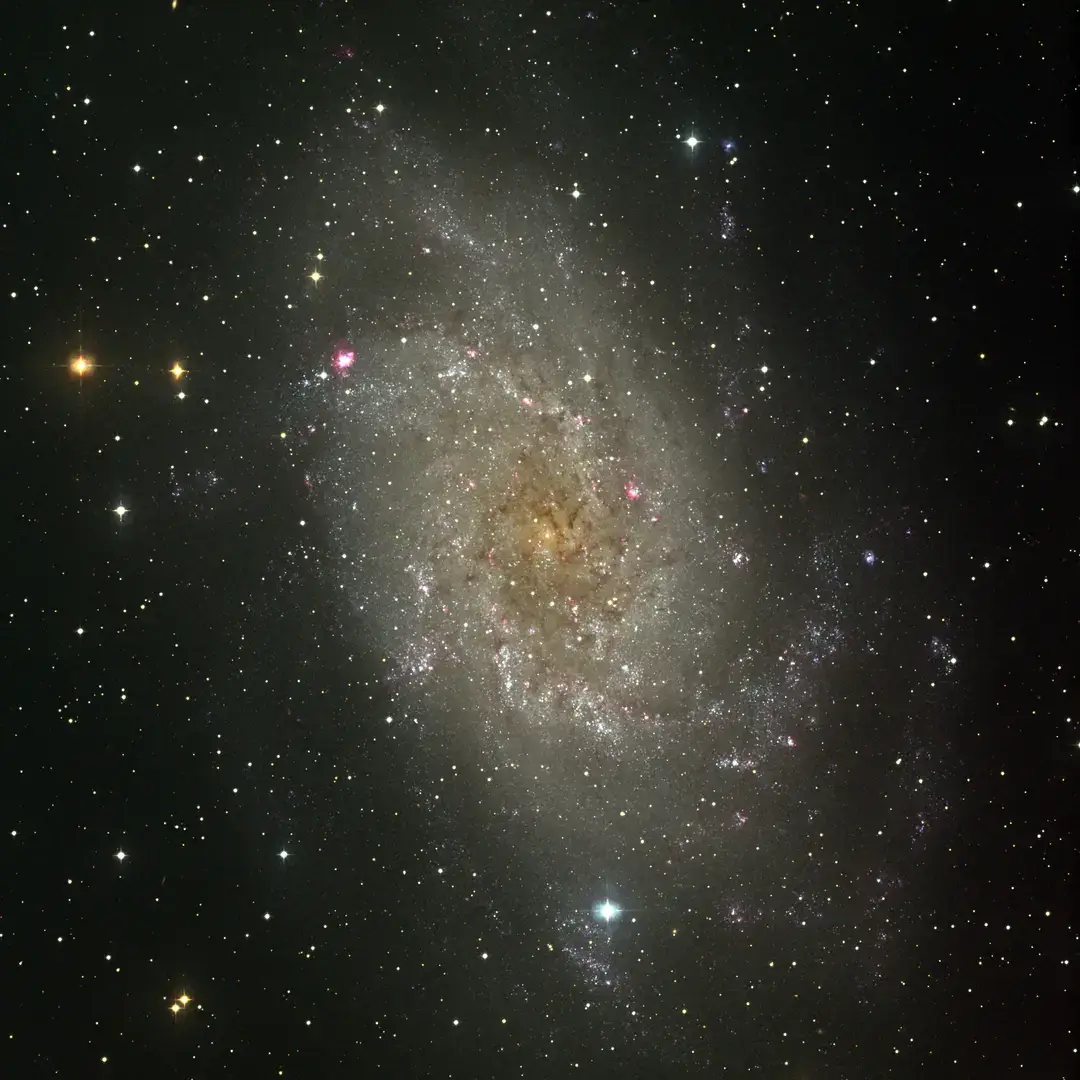
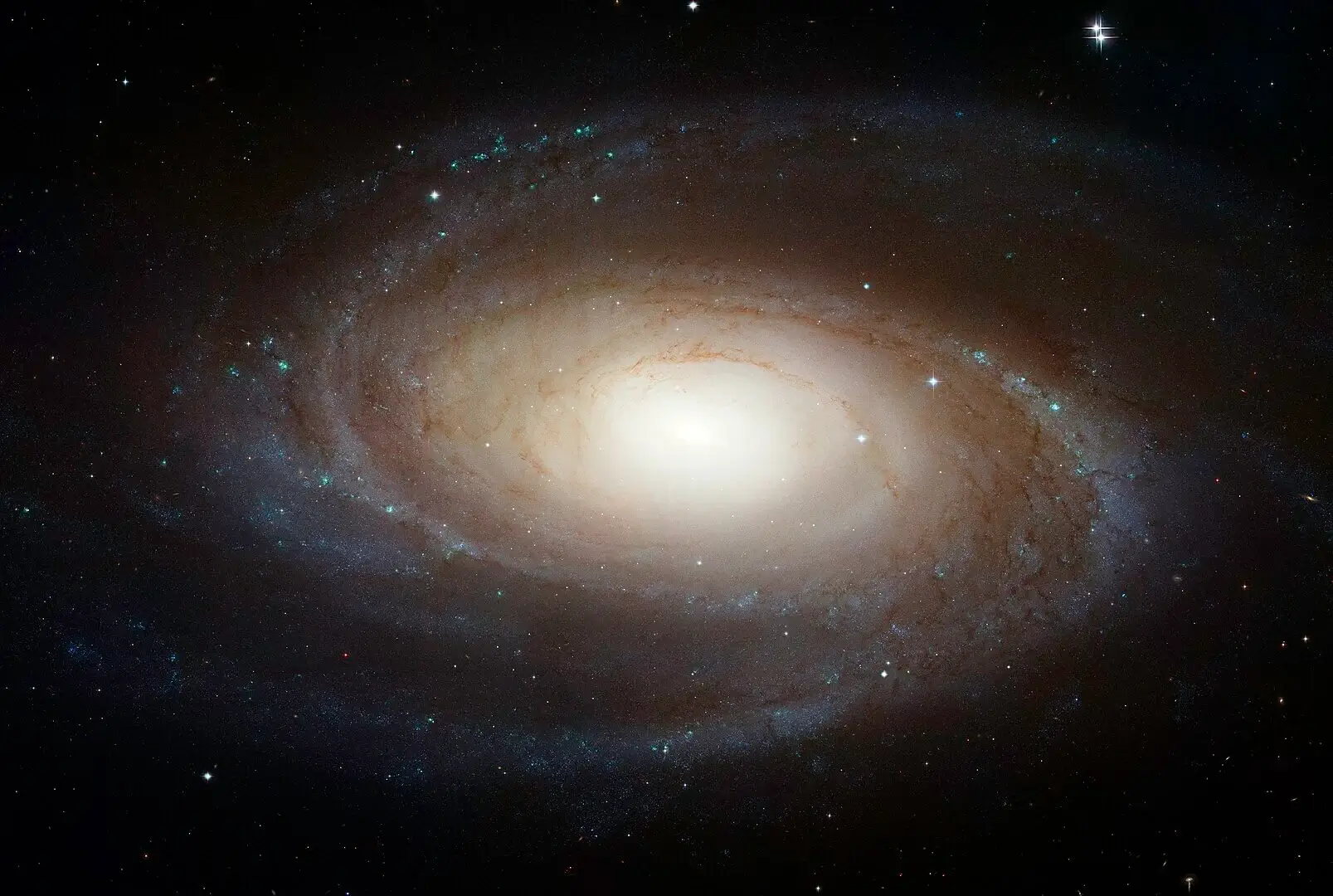
Spiral galaxies, as the name suggests, are wheel-shaped structures. They belong to the SA or SAB class. Spiral galaxies make up 60% of the galaxies in the universe and generally form in low-density regions. They get their name from their spiral arms. Although these arms appear as a cloud of gas from a distance, they contain countless stars and planets when viewed up close. The arms of spiral galaxies are formed by the distance from the center's gravity. Material closer to the center rotates faster due to gravity, while material further away is less affected by this gravity and rotates both slower and over a longer period.
Examples of Spiral Galaxies
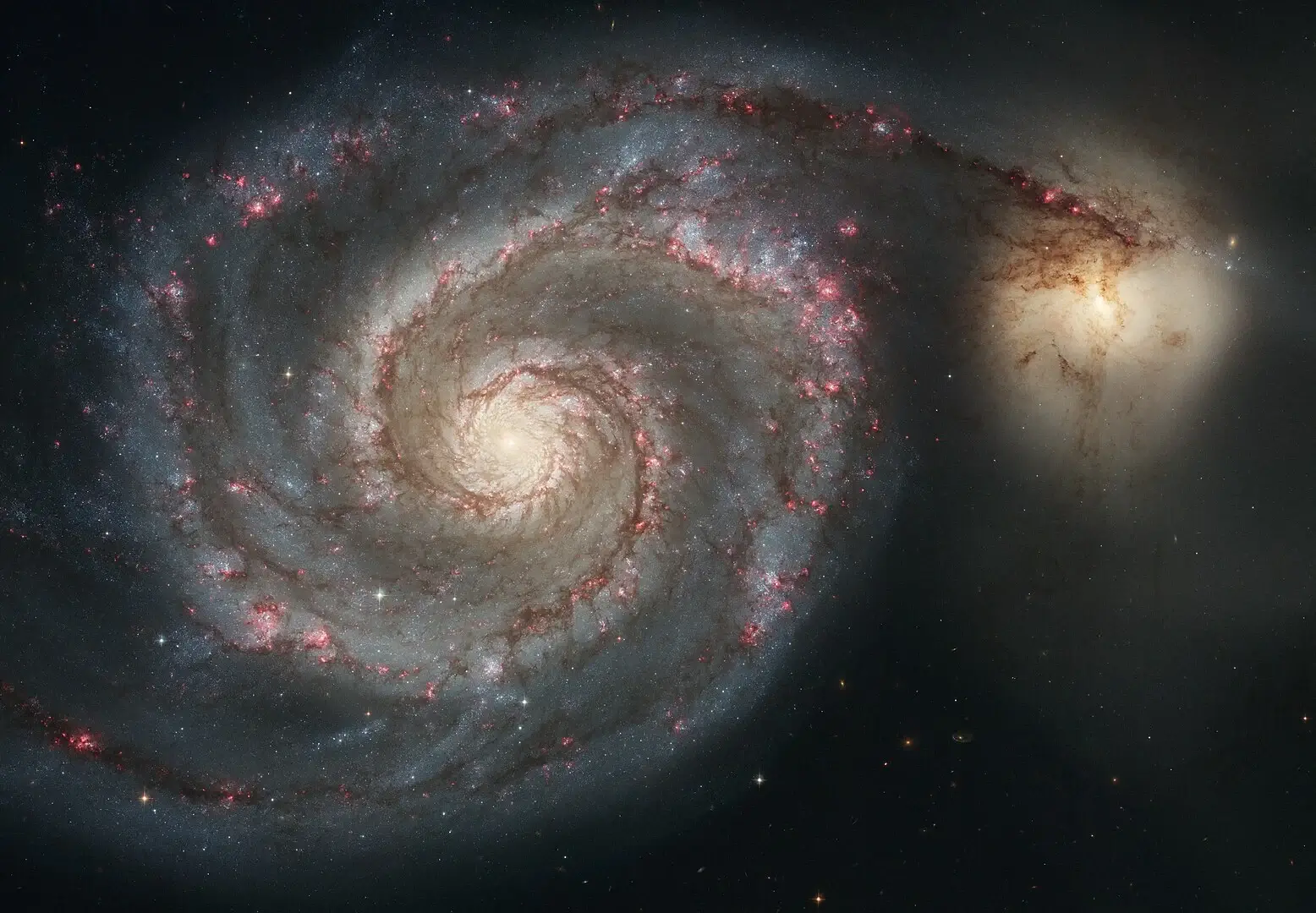
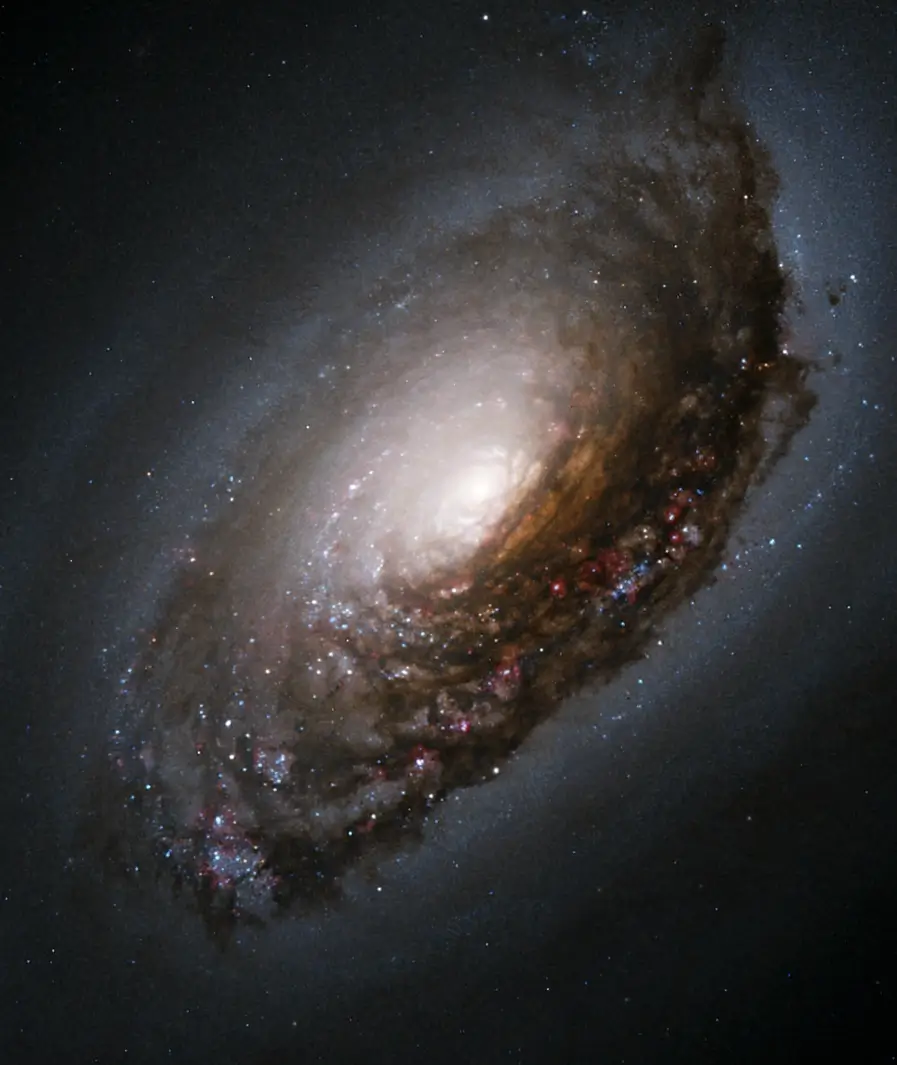
Whirlpool Galaxy (Messier 51a, M51a, or NGC 5194)
Pinwheel Galaxy (Messier 101 or NGC 5457)
Triangulum Galaxy (Messier 33, Triangulum Galaxy, or NGC 598)
Bode Galaxy (Messier 81, M81 or NGC 3031)
Black Eye Galaxy (Sleeping Beauty Galaxy, Messier 64, M64, or NGC 4826)
The Striped Spiral Galaxy
Spiral galaxies are characterized by a central bar shape. They are classified as SB (small bar) galaxies. Bars are found in 66% of spiral galaxies and affect the distribution of stars and gas within the galaxy, thus influencing the spiral arms as well. Spiral galaxies with bars are classified specifically according to the extent of their spiral arms.
Examples of Barred Spiral Galaxies
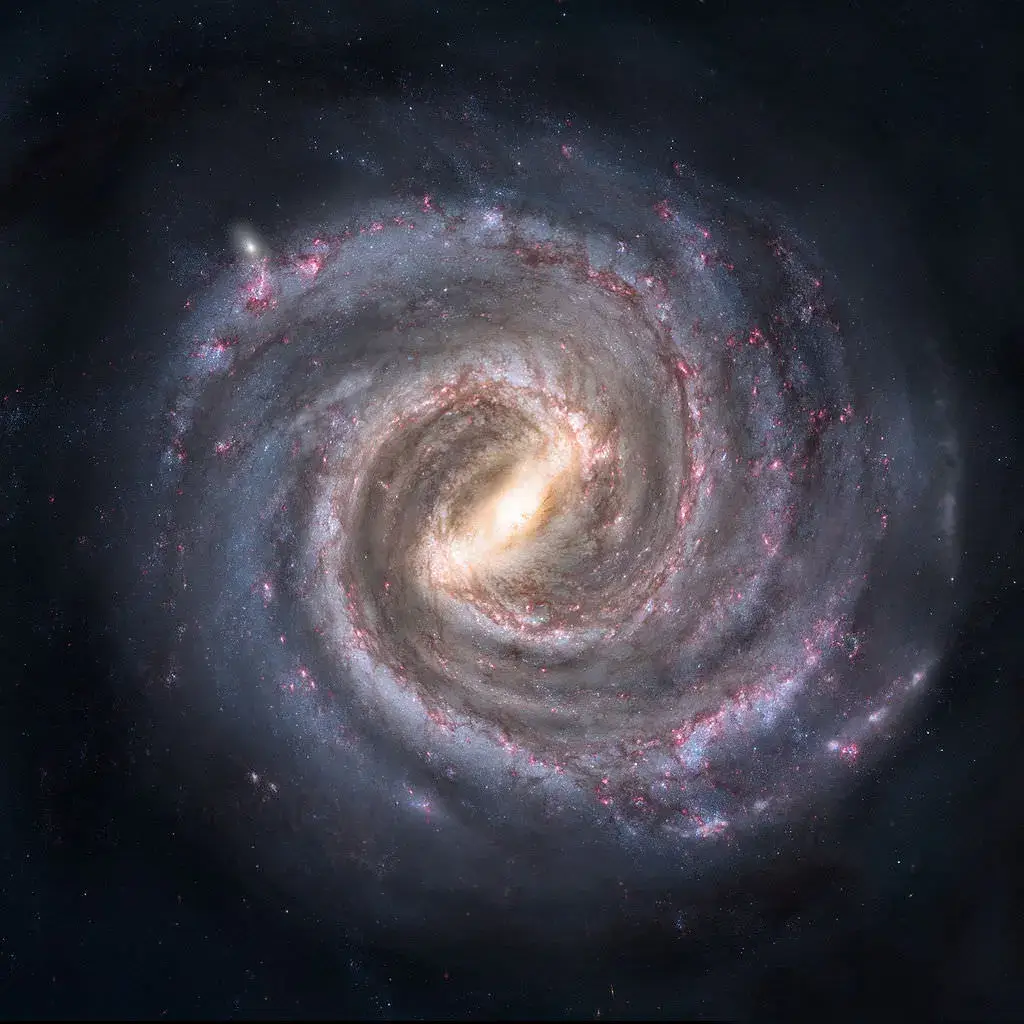
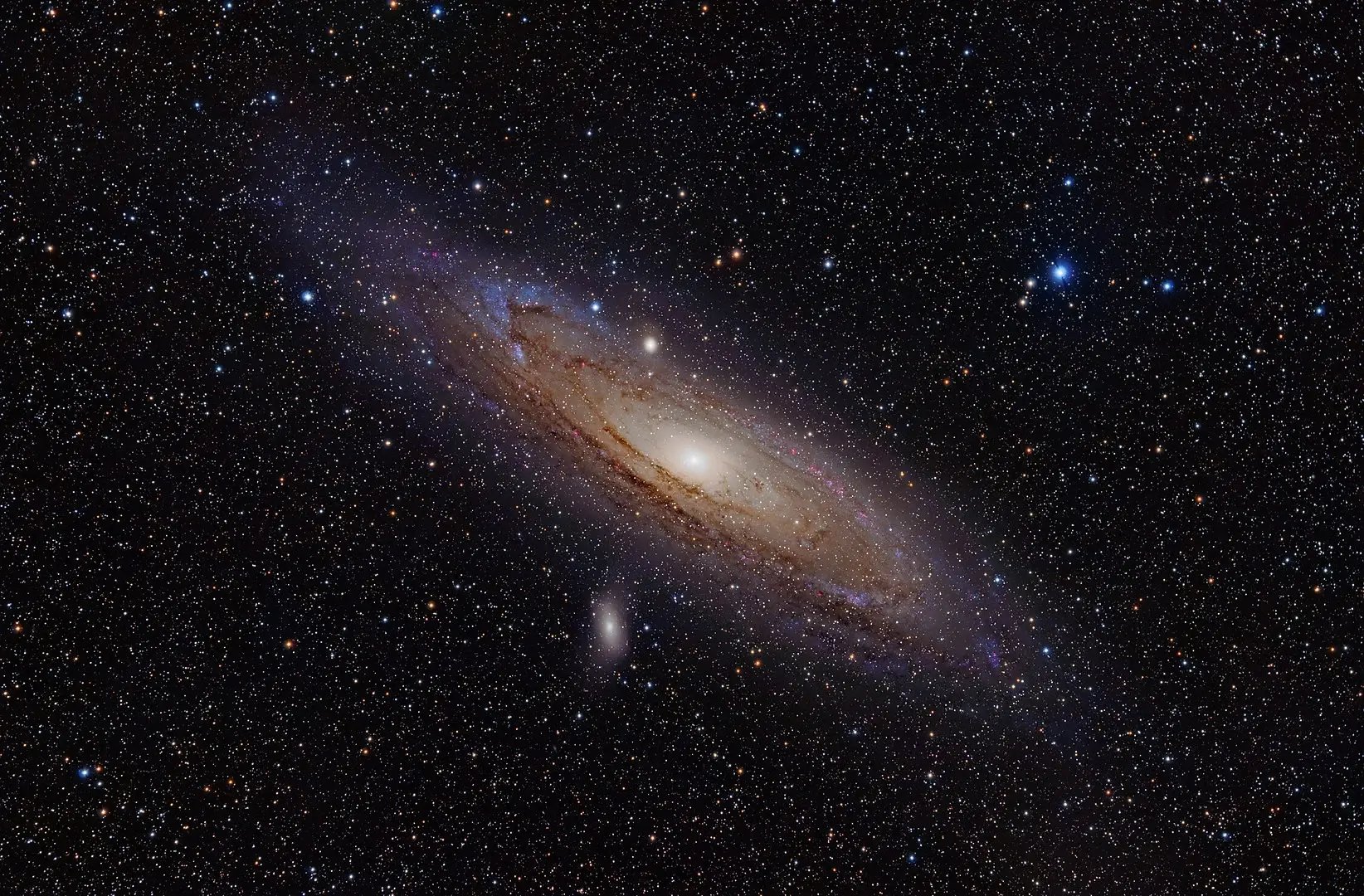
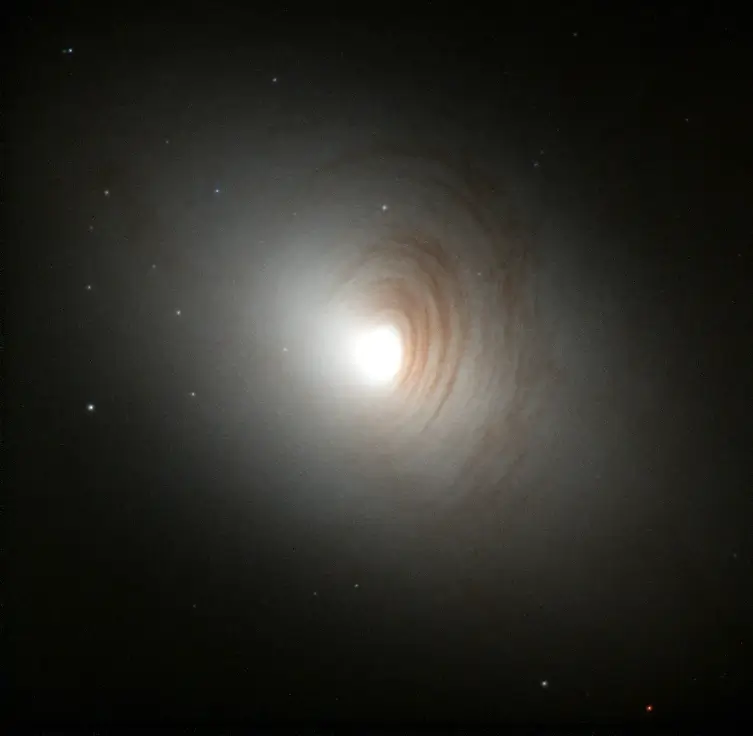
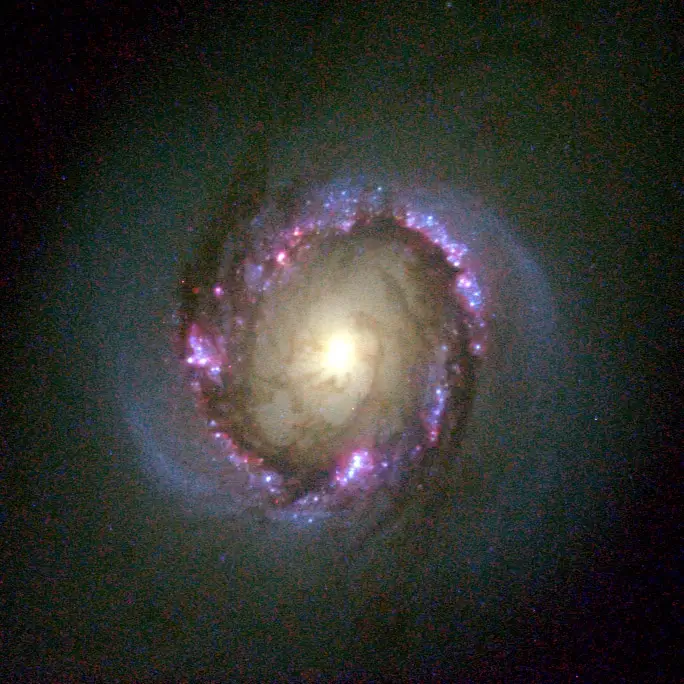
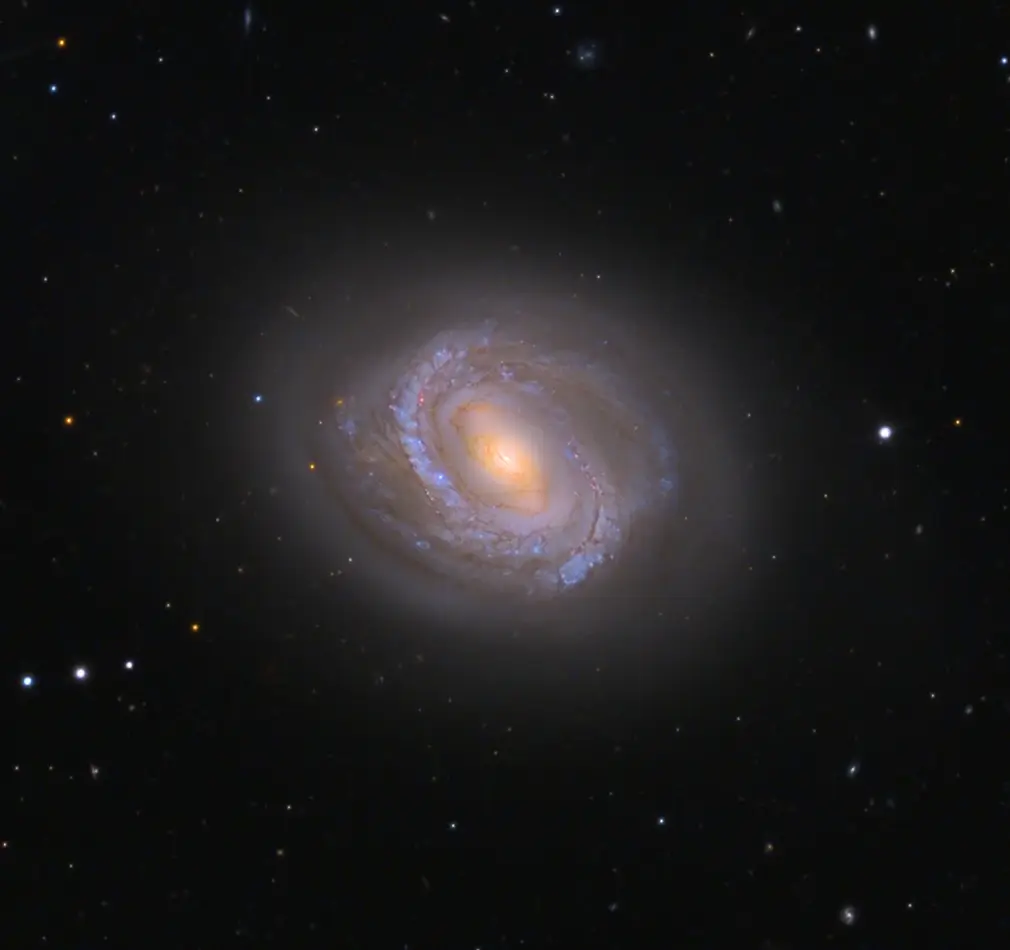
Milky Way Galaxy
Andromeda Galaxy (Messier 31, M31, or NGC 224)
NGC 2787
NGC 4314
Messier 58
Ringed Galaxy
Ring galaxies are galaxies that have a partially bright center and a ring-like shape. These galaxies are composed of high-mass, young blue stars. Some astronomers believe that ring galaxies form when a smaller galaxy passes through the center of a larger galaxy. Other astronomers think that rings form when an outer accretion occurs around some galaxies.
Examples of Ringed Galaxies

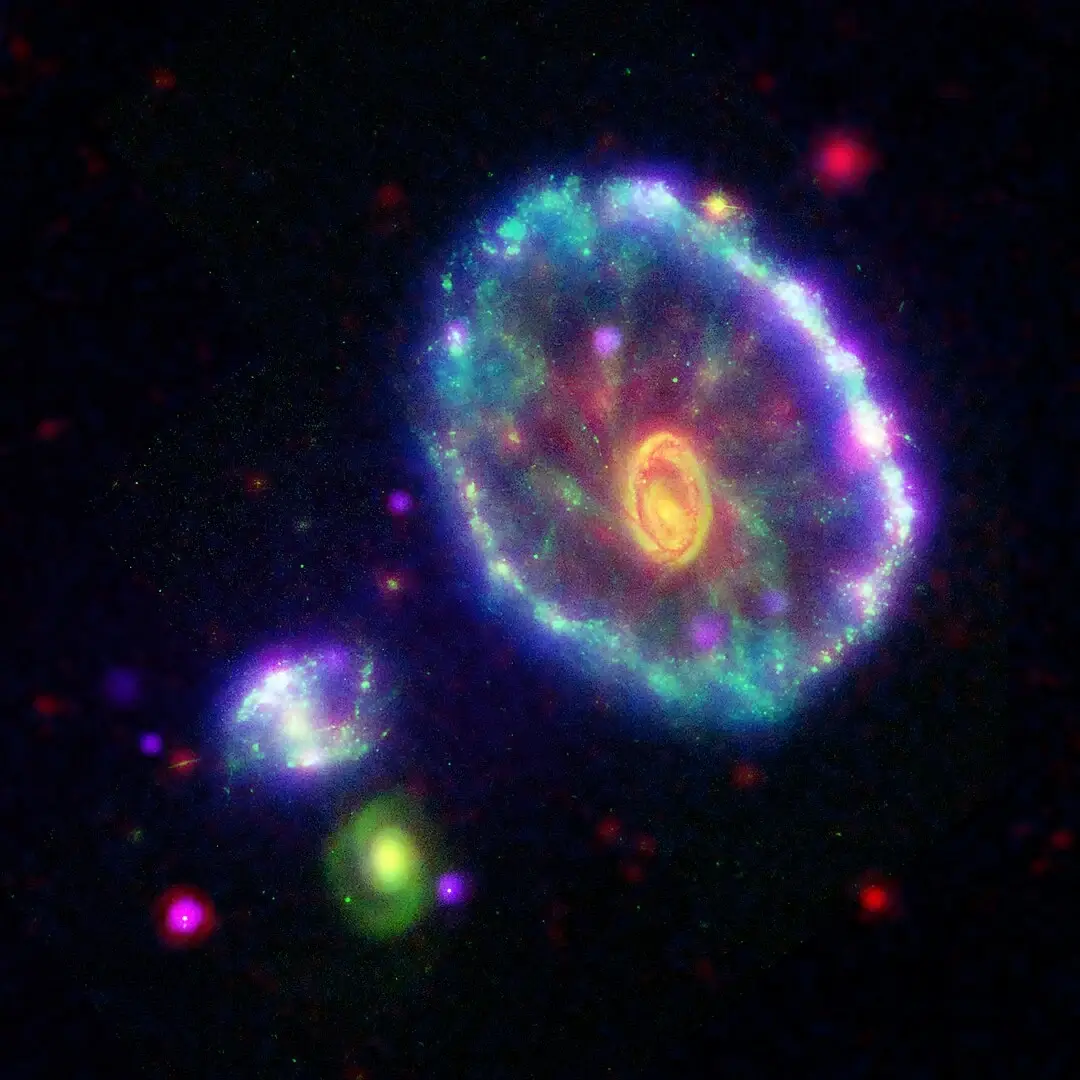
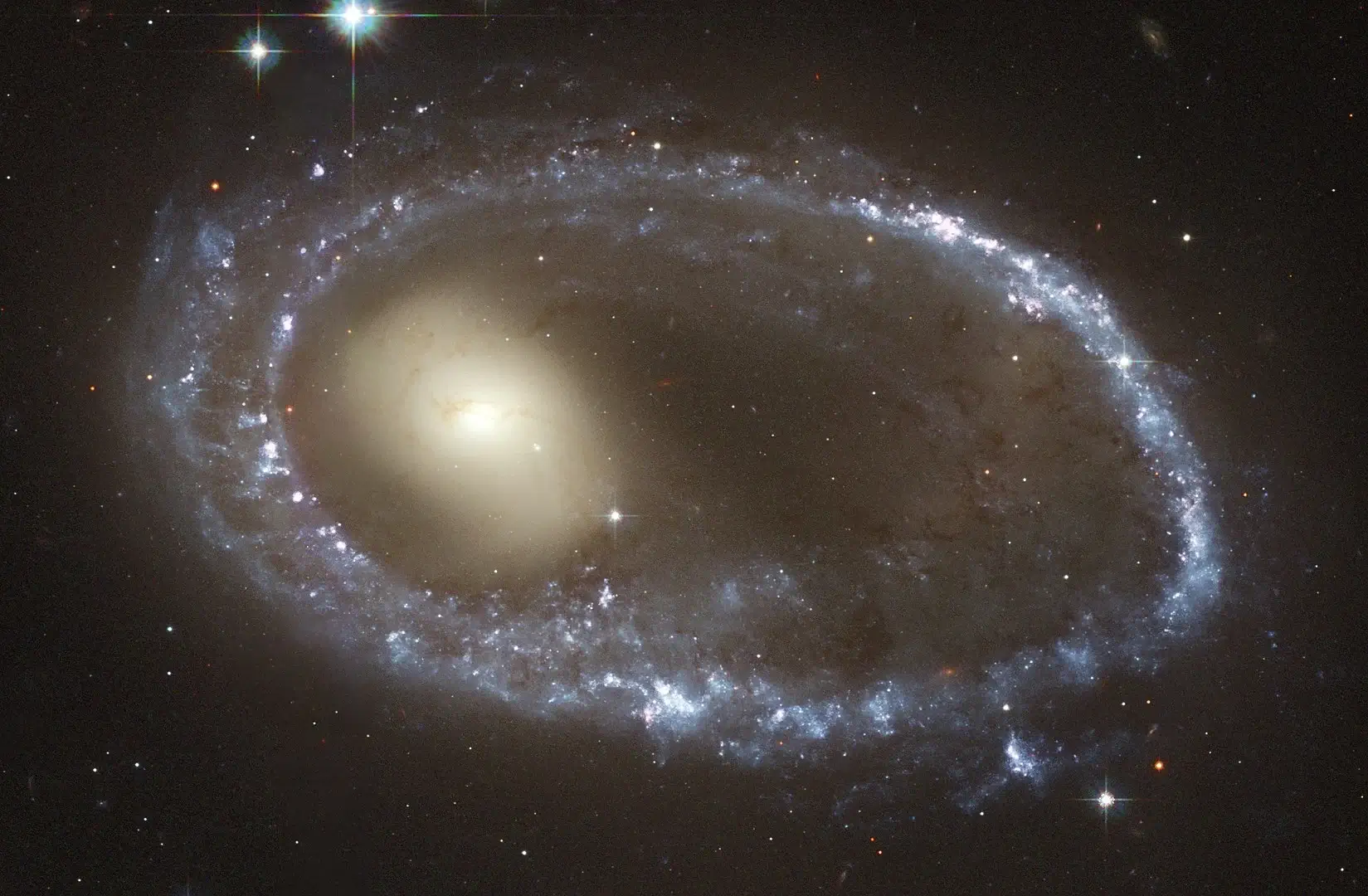

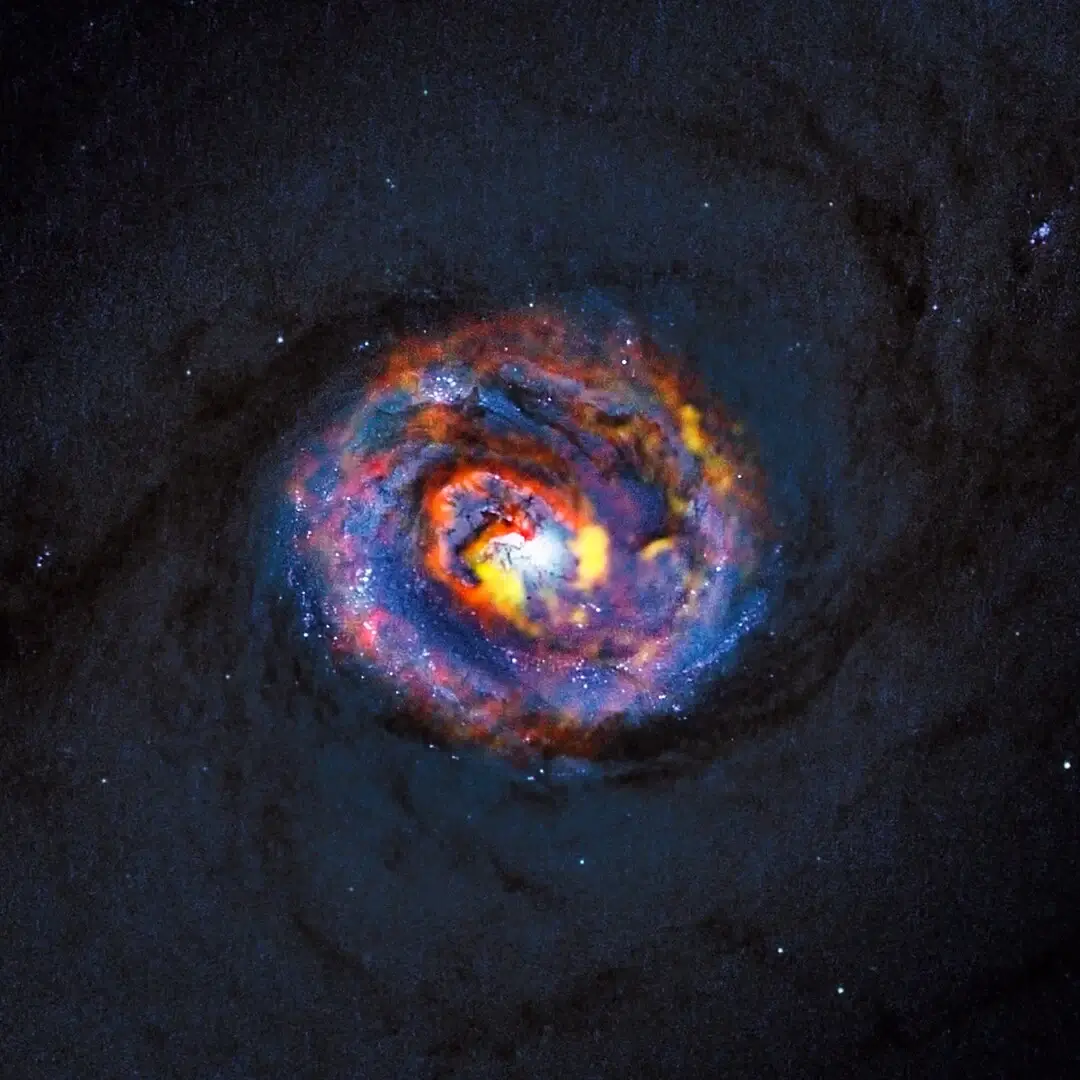
Hoag's Body
Car Wheel Galaxy
Lindsay-Shapley Ring
Mayall Object
NGC 1433 (PGC 13586)
Lenticular Galaxy
Lenticular galaxies are S0 class galaxies, falling between the spiral and elliptical classes. They have a large disk but do not yet have spiral arms. They are disk galaxies that have consumed or lost most of their interstellar matter and therefore have very little ongoing star formation. Thus, they mostly host aging stars.
Examples of Lenticular Galaxies
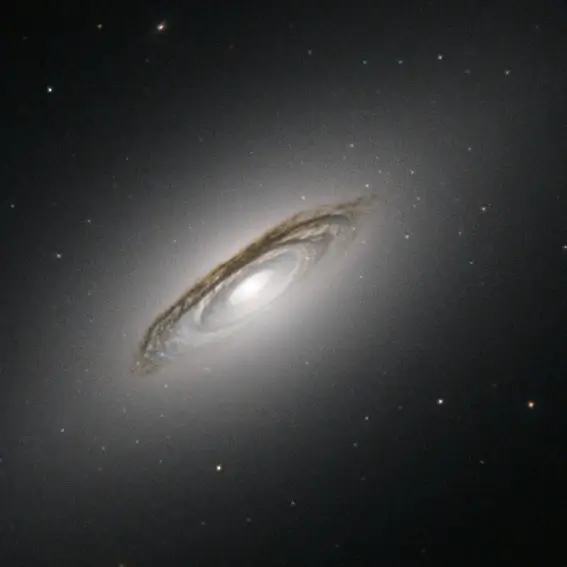
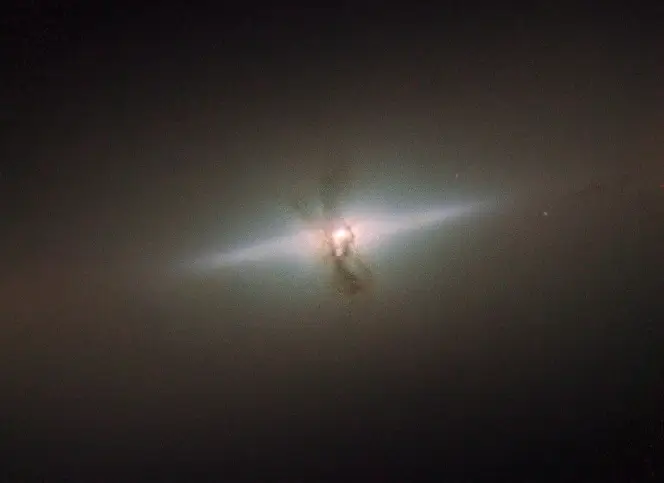

Car Wheel Galaxy
NGC 6861
NGC 4111
NGC 5308
Elliptical Galaxy
Elliptical galaxies have a smooth and almost featureless appearance. They are class E galaxies. Most elliptical galaxies are composed of old, low-mass stars and have a sparse interstellar medium. They are found closer to the centers of galaxy clusters. They are generally less common than other galaxies in the universe. Their size varies from dwarf ellipticals containing tens of millions of stars to supergiant galaxies containing over a hundred trillion stars that dominate galaxy clusters. Most elliptical galaxies are thought to have formed as a result of collisions and mergers of spiral galaxies.
Elliptical galaxies generally have minimal star-forming activity, but they may briefly enter a star-forming phase when merging with another galaxy. The stars within elliptical galaxies are, on average, much older than those in spiral galaxies.
Examples of Elliptical Galaxies

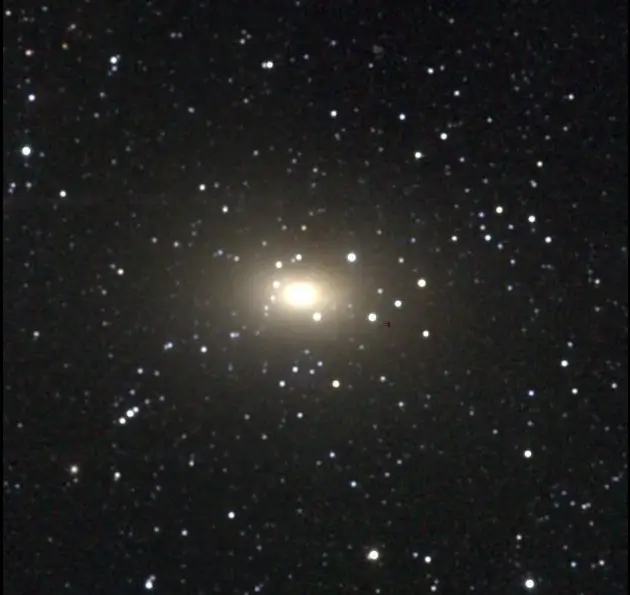
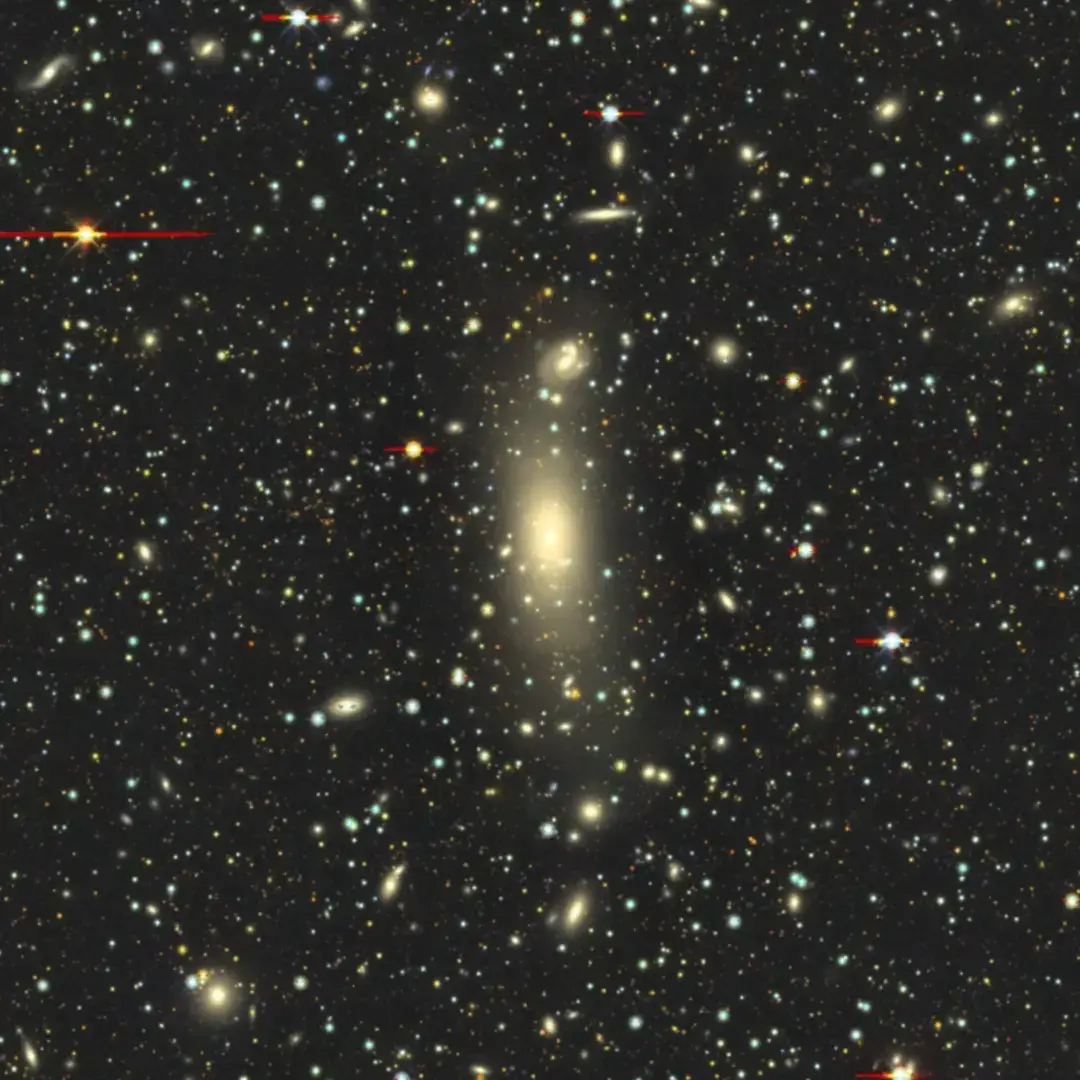
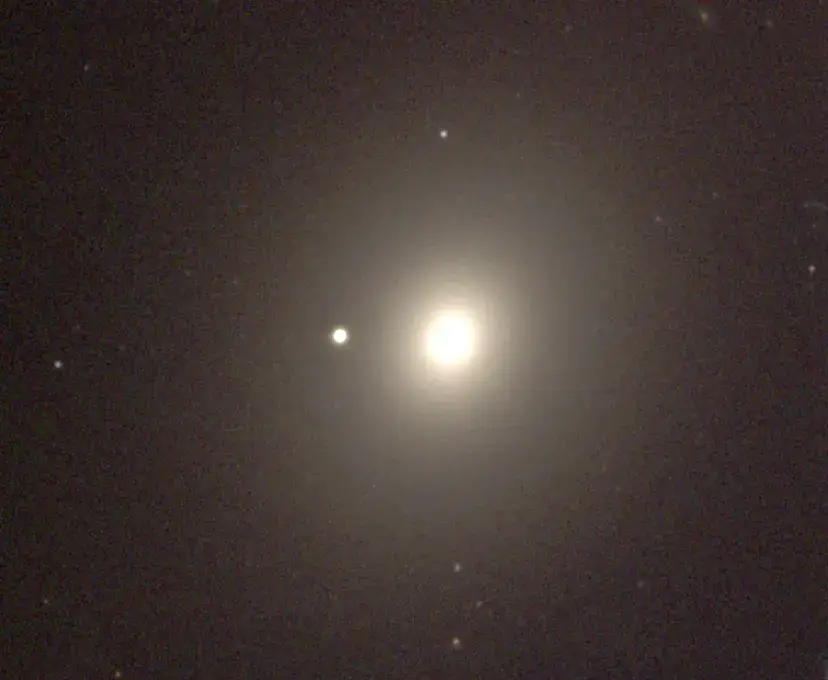
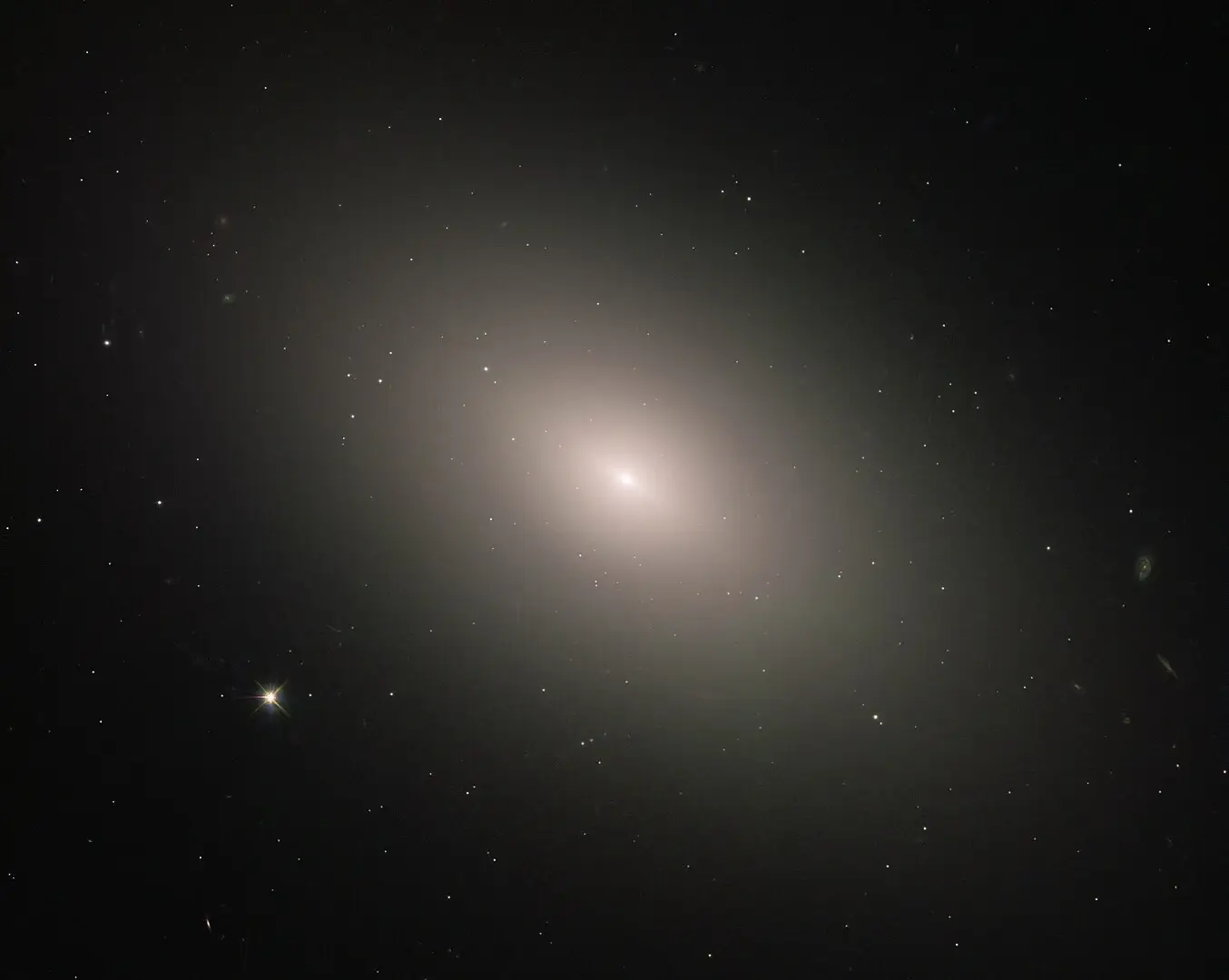
Hercules A
Maffei 1
ESO 383-76 (ESO 383-G 076)
Messier 49
Messier 59
Dwarf Galaxy
Dwarf galaxies are small galaxies composed of between 1,000 and a few billion stars. They are classified as dSph galaxies. The formation and activity of dwarf galaxies are thought to be largely influenced by interactions with larger galaxies. Due to their small size, dwarf galaxies are known to be pulled and torn apart by neighboring spiral galaxies, leading to stellar streams and galaxy mergers. It is believed that dwarf galaxies form either due to gravity during the formation of larger galaxies or as a result of streams of fragments broken off from galaxies due to galaxy collisions.
Examples of Dwarf Galaxies
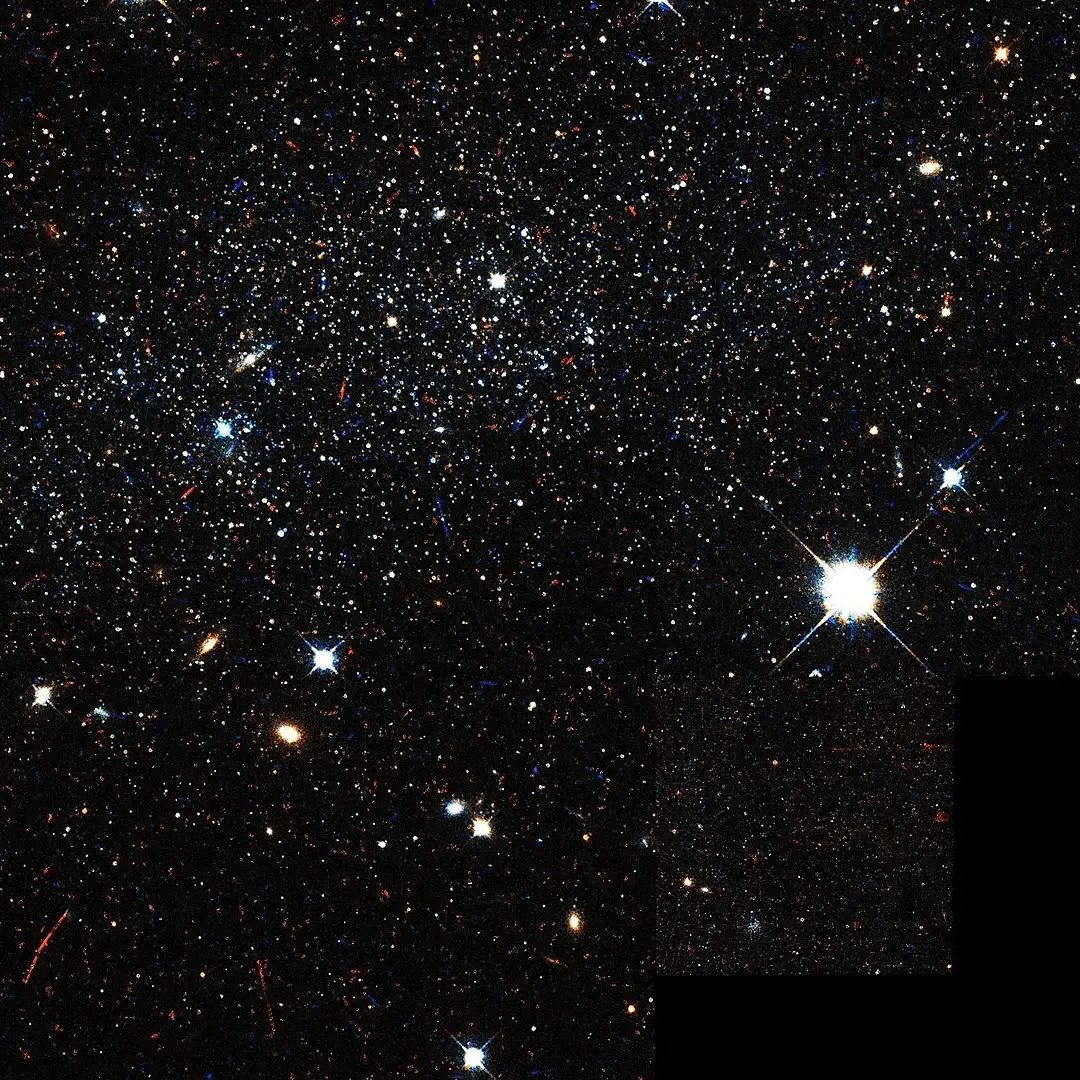
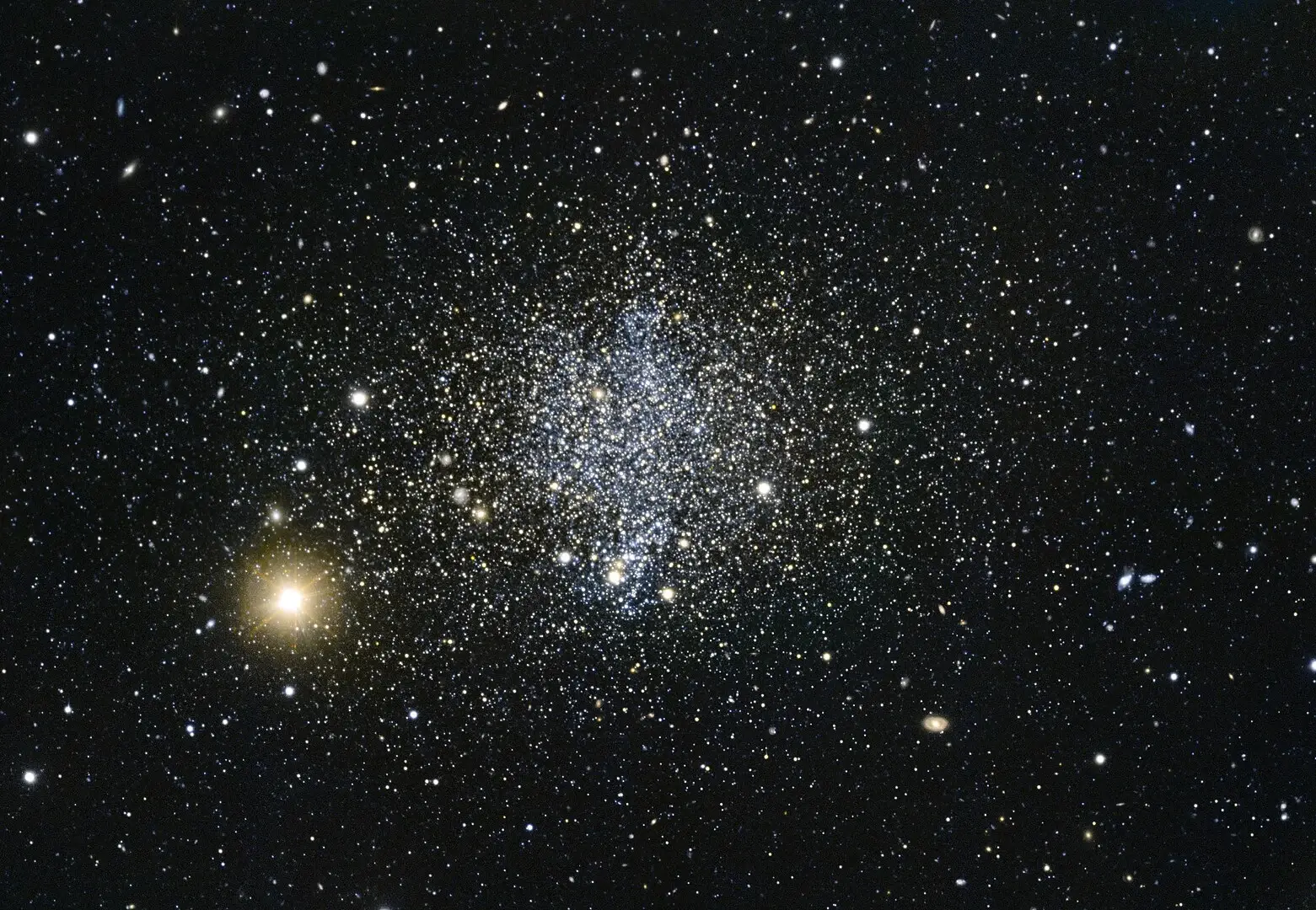

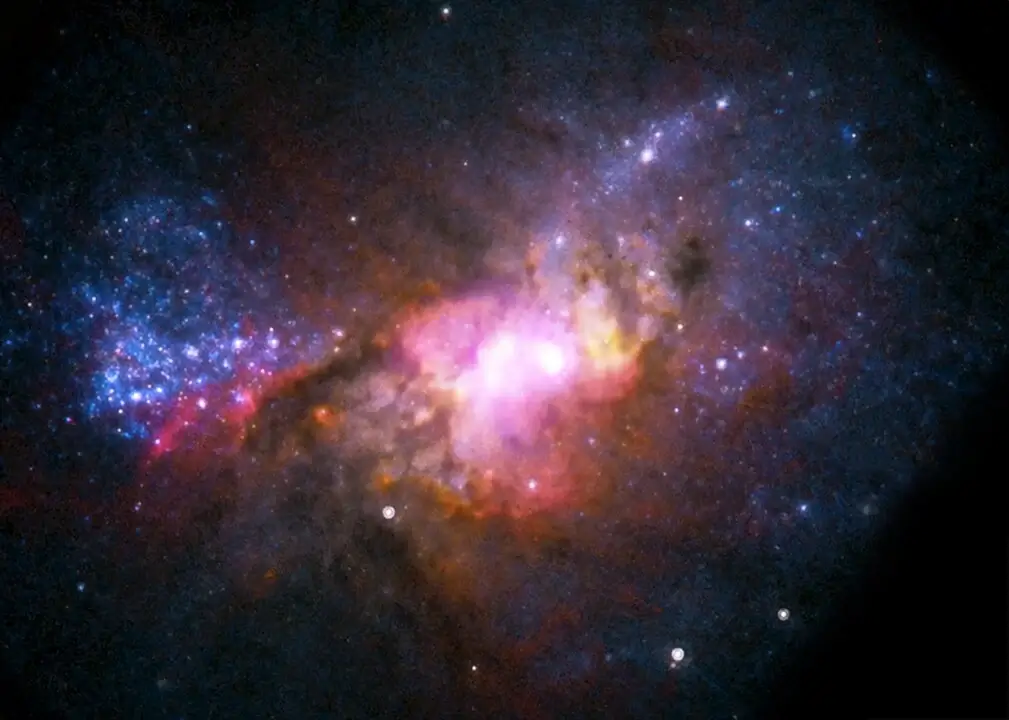
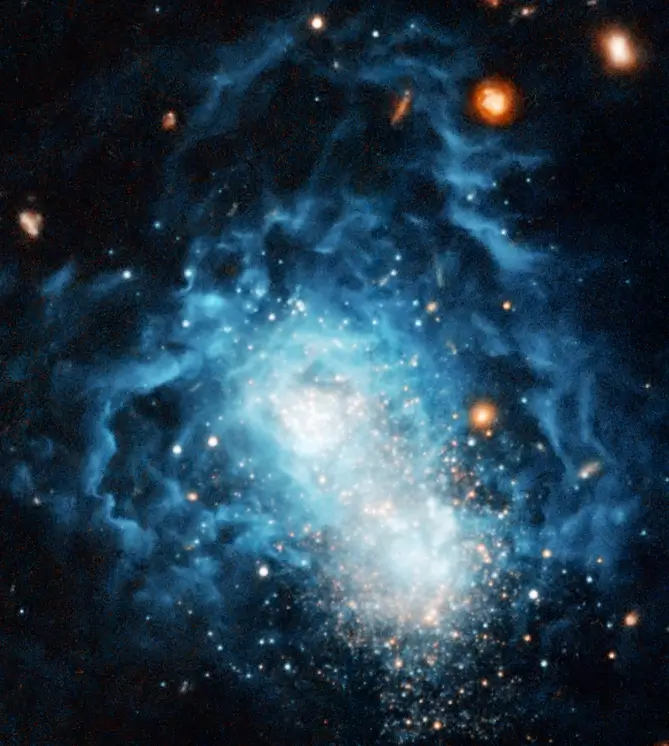
Aquarius Dwarf Galaxy
Phoenix Dwarf Galaxy
Sextans A
Hen 2-10
I Zwicky 18
Irregular Galaxy
Irregular galaxies are galaxies that lack a specific shape, unlike spiral or elliptical galaxies. They are classified as Irr I in the Hubble classification and m-class galaxies in De Vaucouleurs' diagram. Despite their small size compared to other galaxies, they are thought to make up about a quarter of the galaxies in the universe. Because of their small size, they are also more sensitive to external influences. In fact, it is known that some irregular galaxies were once spiral or elliptical galaxies, but were deformed by an irregular gravitational force from an external source.
Examples of Irregular Galaxies
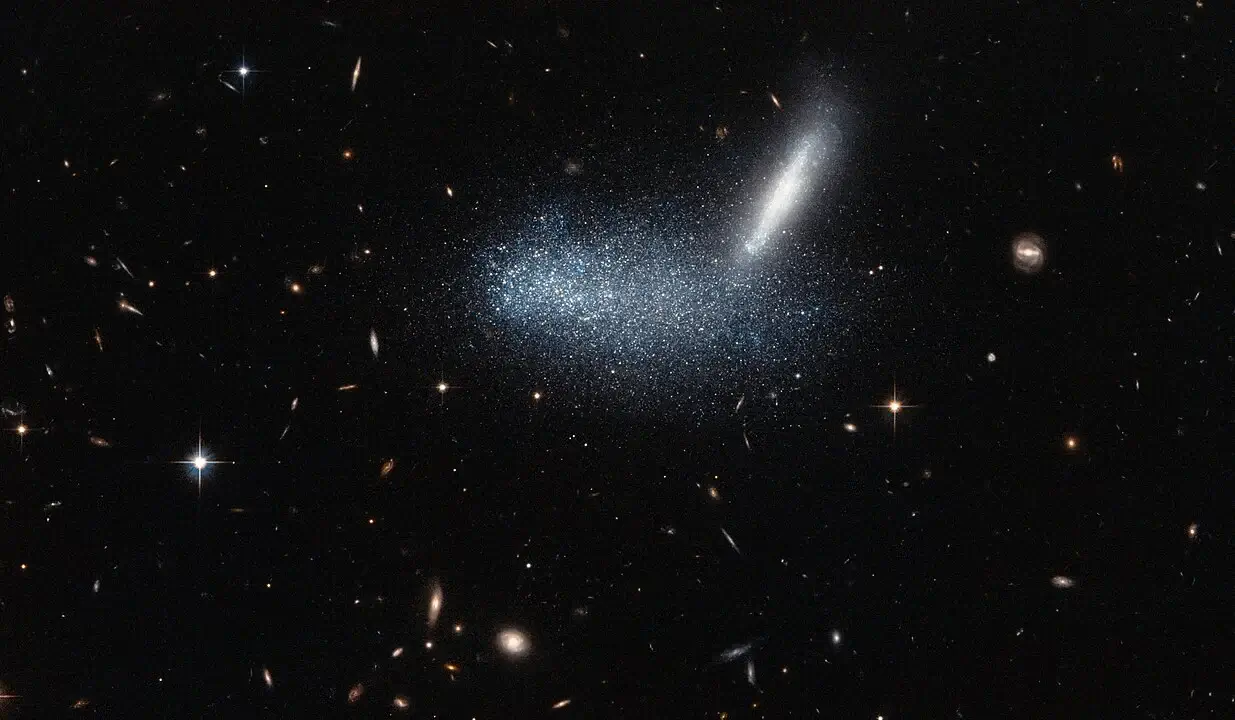
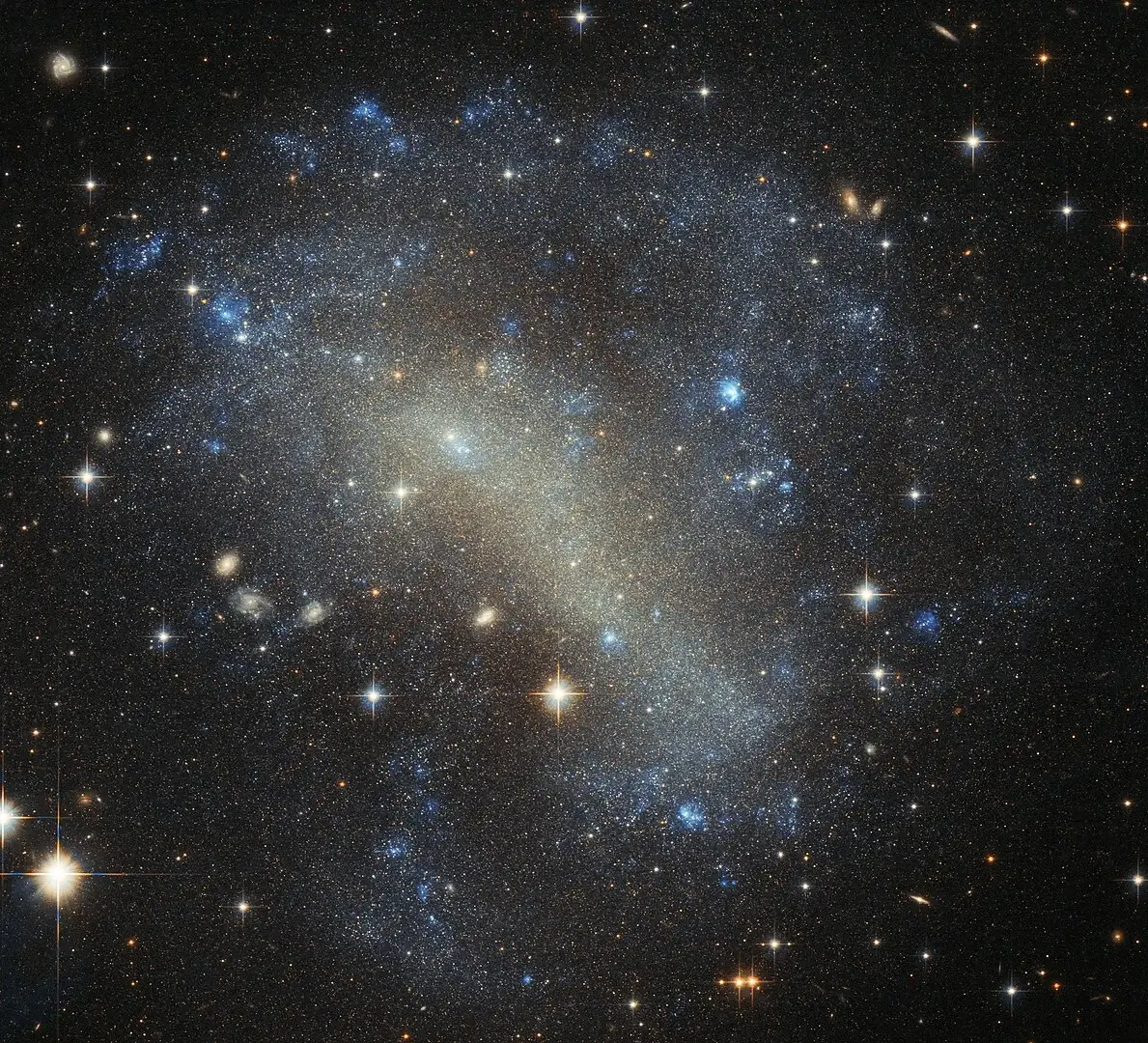
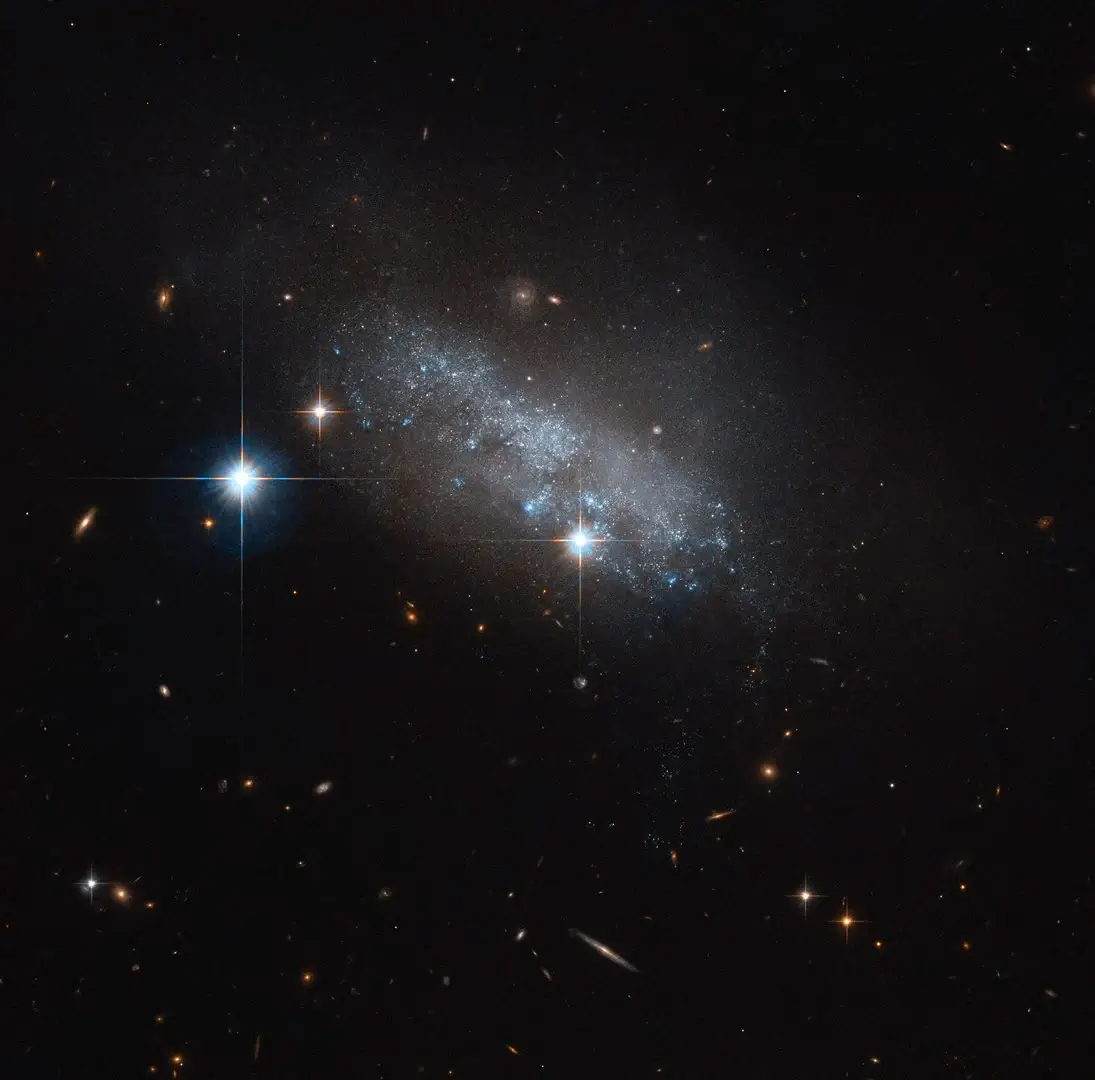
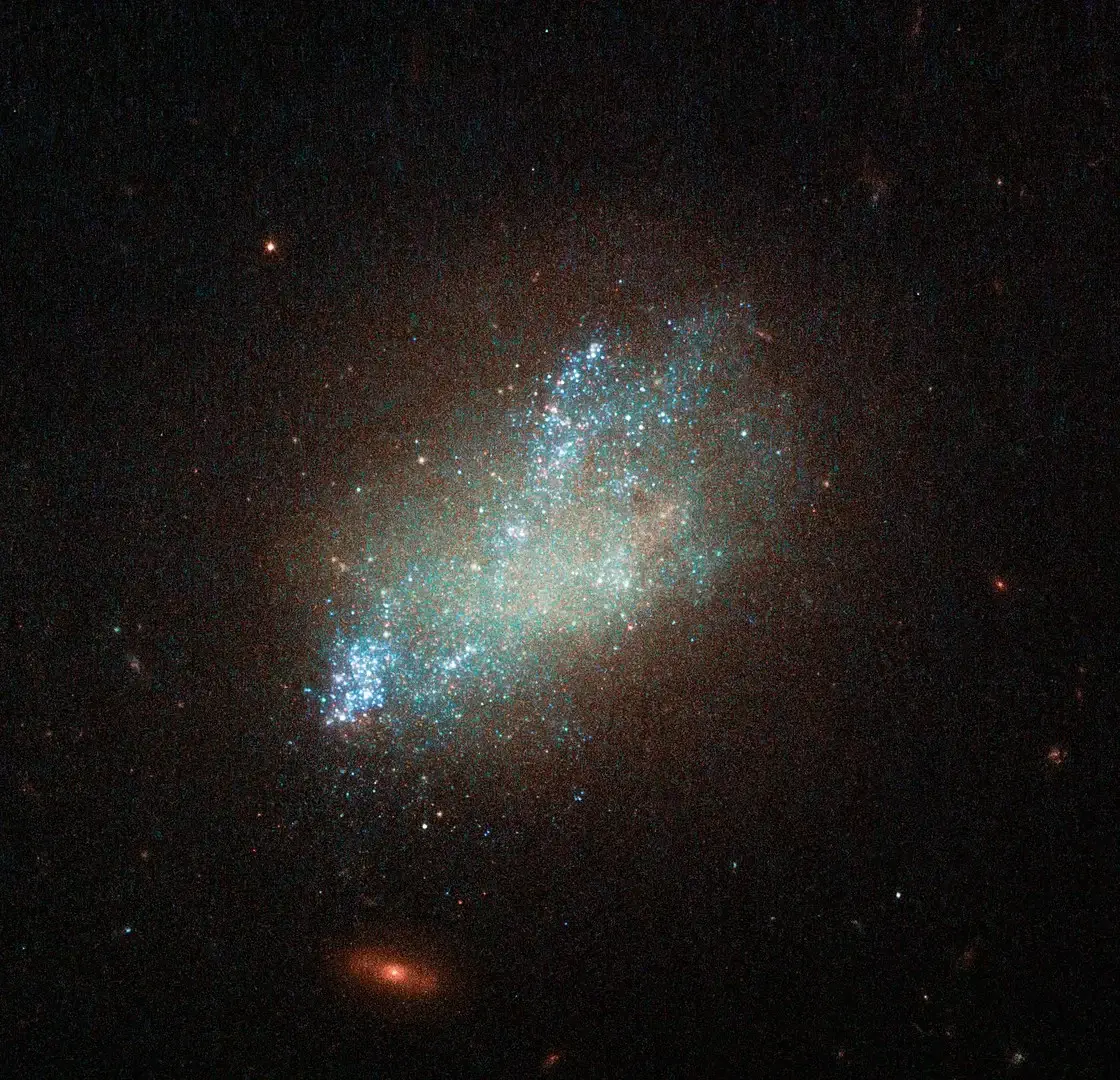
PGC 16389
IC 4710
IC 3583
IC 559
Starburst Galaxy
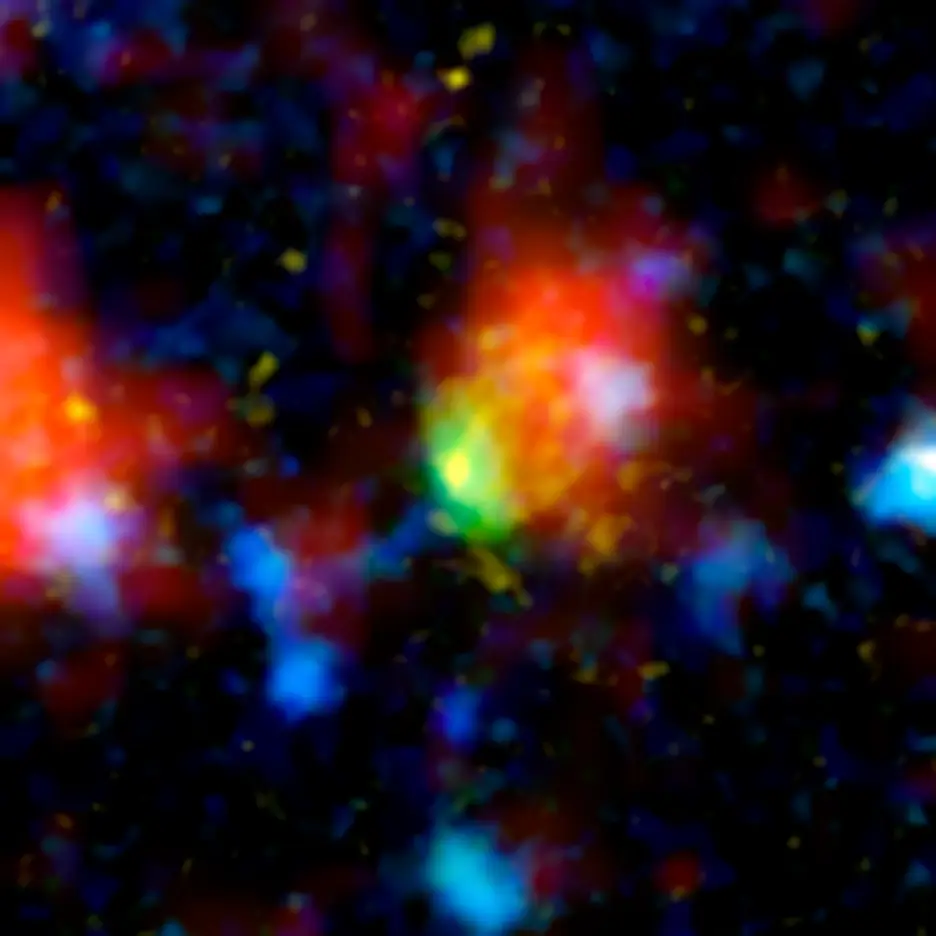
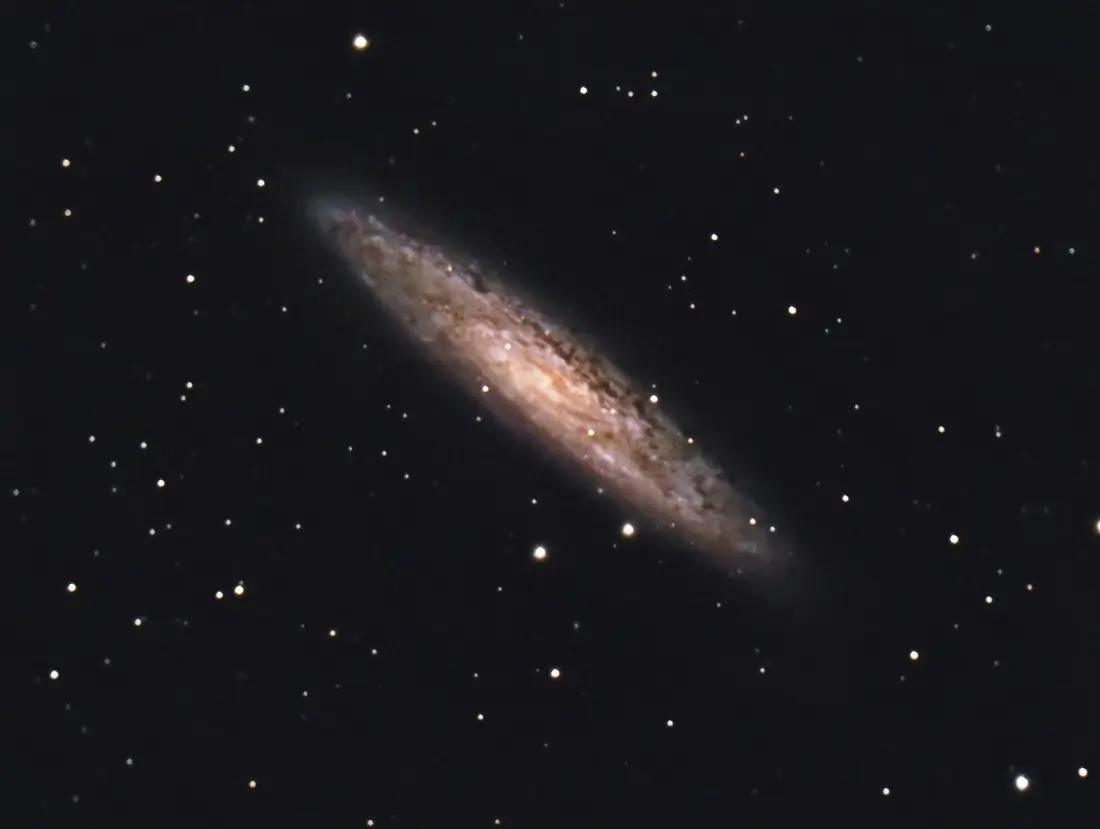
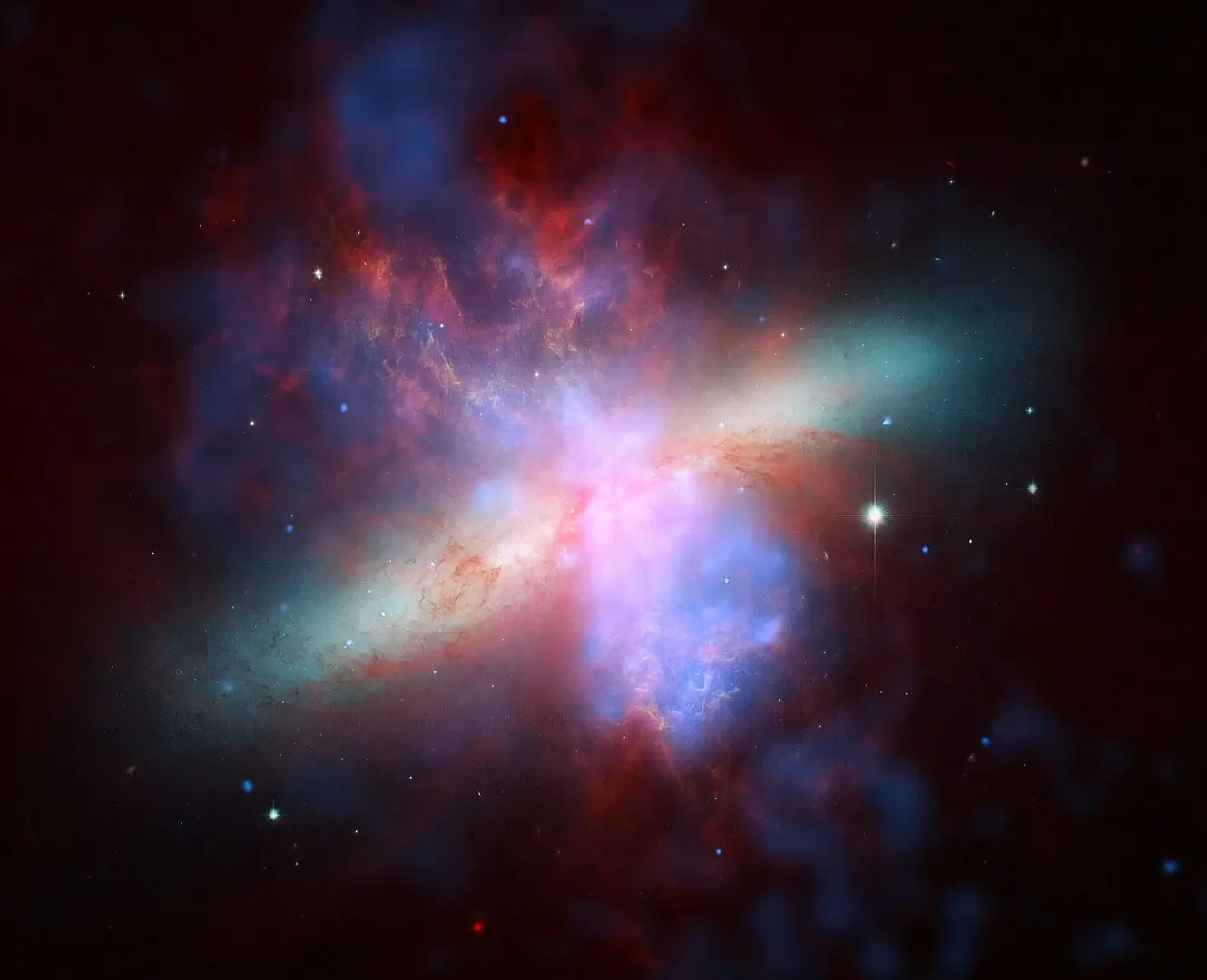
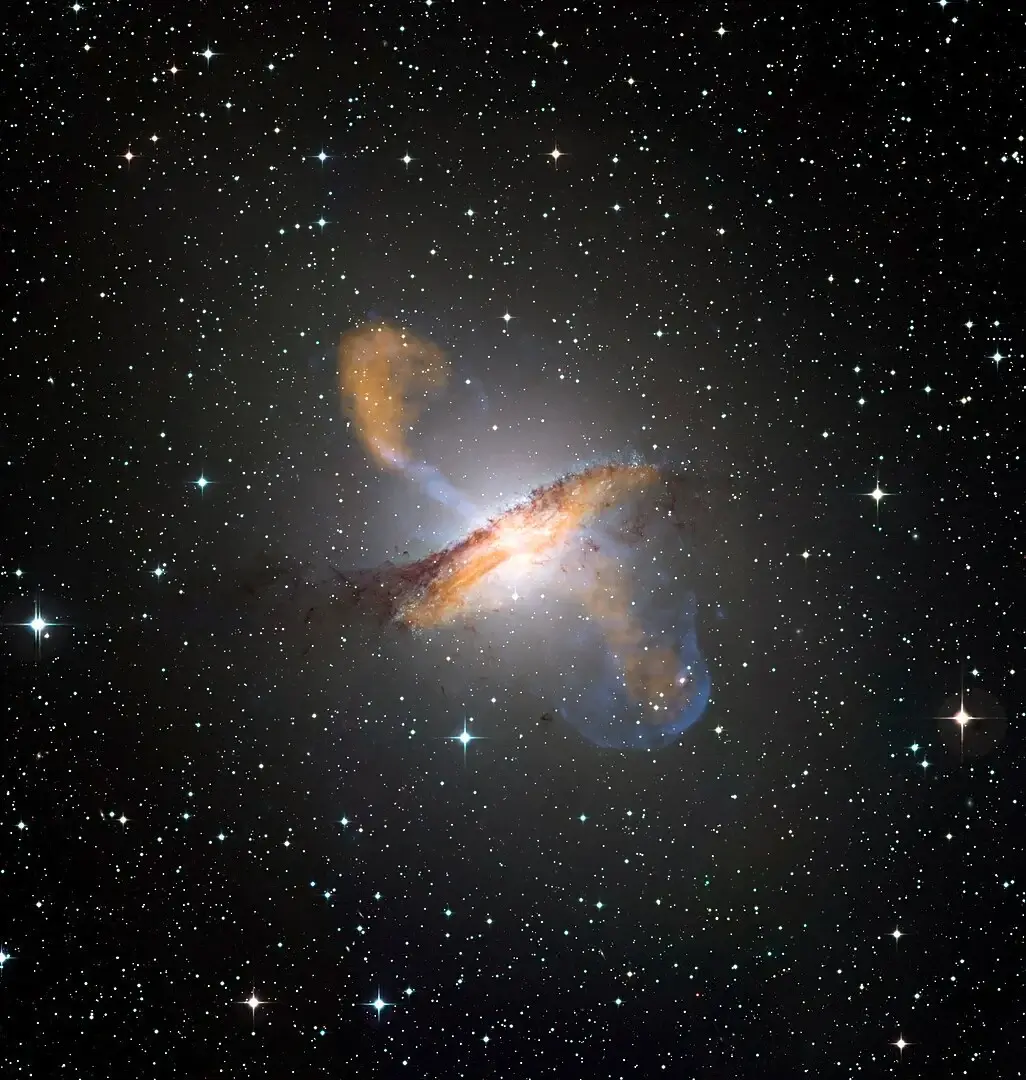
Starburst galaxies are galaxies that form stars at an exceptionally high rate compared to the star formation rate observed in most other galaxies. For example, while the star formation rate of the Milky Way galaxy is approximately 3 million stars per year, starburst galaxies can have a rate of 100 million stars per year or more. The star formation rate in a starburst galaxy is so high that all of its gas reservoirs are depleted in a time much shorter than the galaxy's age. Therefore, a starburst in a galaxy is a phase and covers a short period of the galaxy's existence.
Most starburst galaxies are in the midst of a merger or close encounter with another galaxy. When two galaxies approach, material is forcibly pulled toward the center. This pull creates an extreme environment because the gas in the environment is very dense. As a result, massive, very hot, and bright stars form. Starburst galaxies naturally provide us with information about the evolution and formation processes of galaxies.
Examples of Stellar Explosion Galaxies
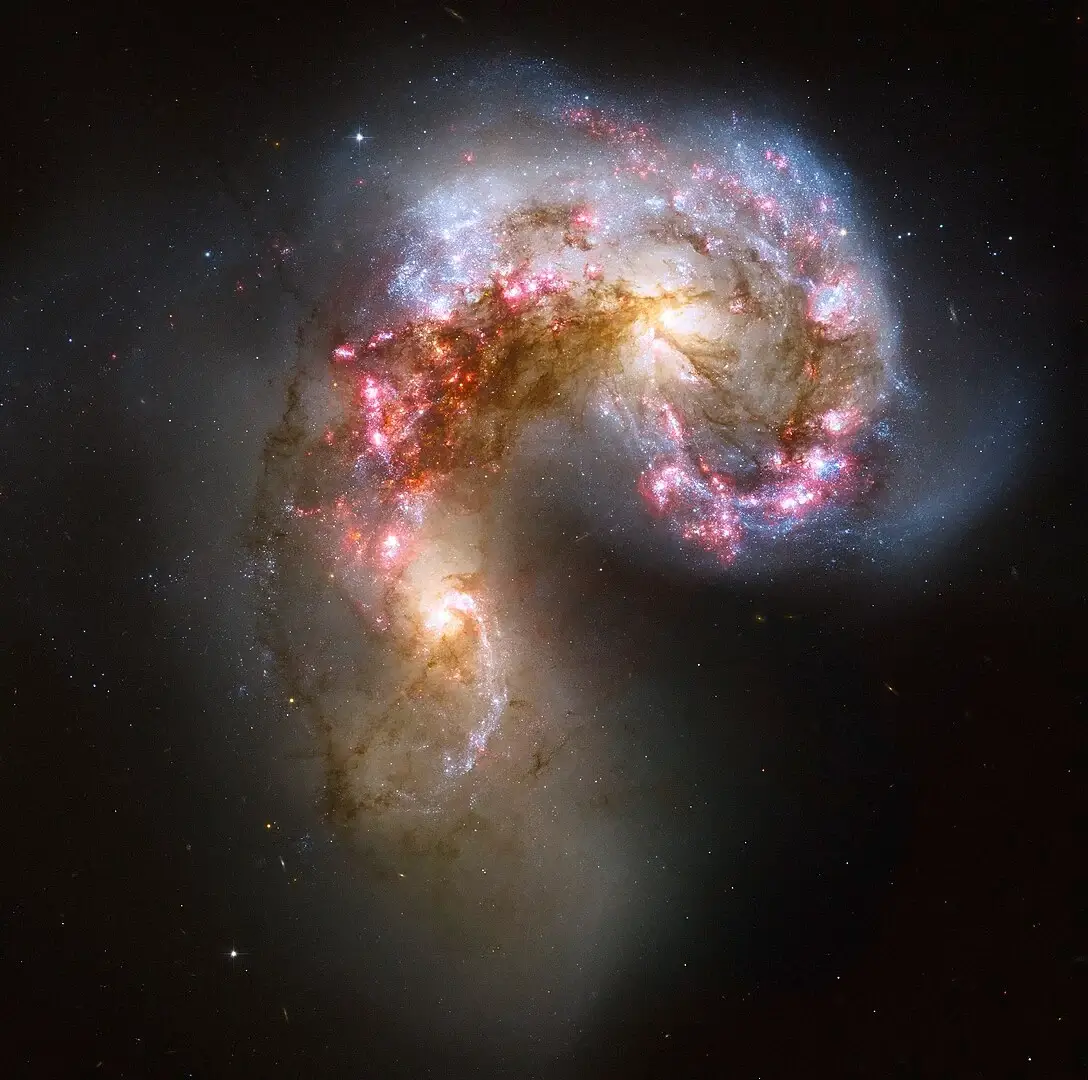
Antenna Galaxies (NGC 4038 and NGC 4039)
Baby Boom Sky Island
Sculptor Galaxy
Messier 82 (NGC 3034 or Cigar Galaxy PGC 28655)
Centaurus A (NGC 5128 or Caldwell 77)
Extremely Disorganized Galaxy
Extremely diffuse galaxies are galaxies with extremely low brightness. Their low brightness stems from the sparseness of star-forming gas, leading us to conclude that the stars in the galaxy are actually very old. Furthermore, according to discoveries made in 2018, extremely diffuse galaxies contain the most extreme forms of dark matter. Some may be composed entirely of dark matter, with as few as 1% observable stars.
Examples of Extremely Scattered Galaxies
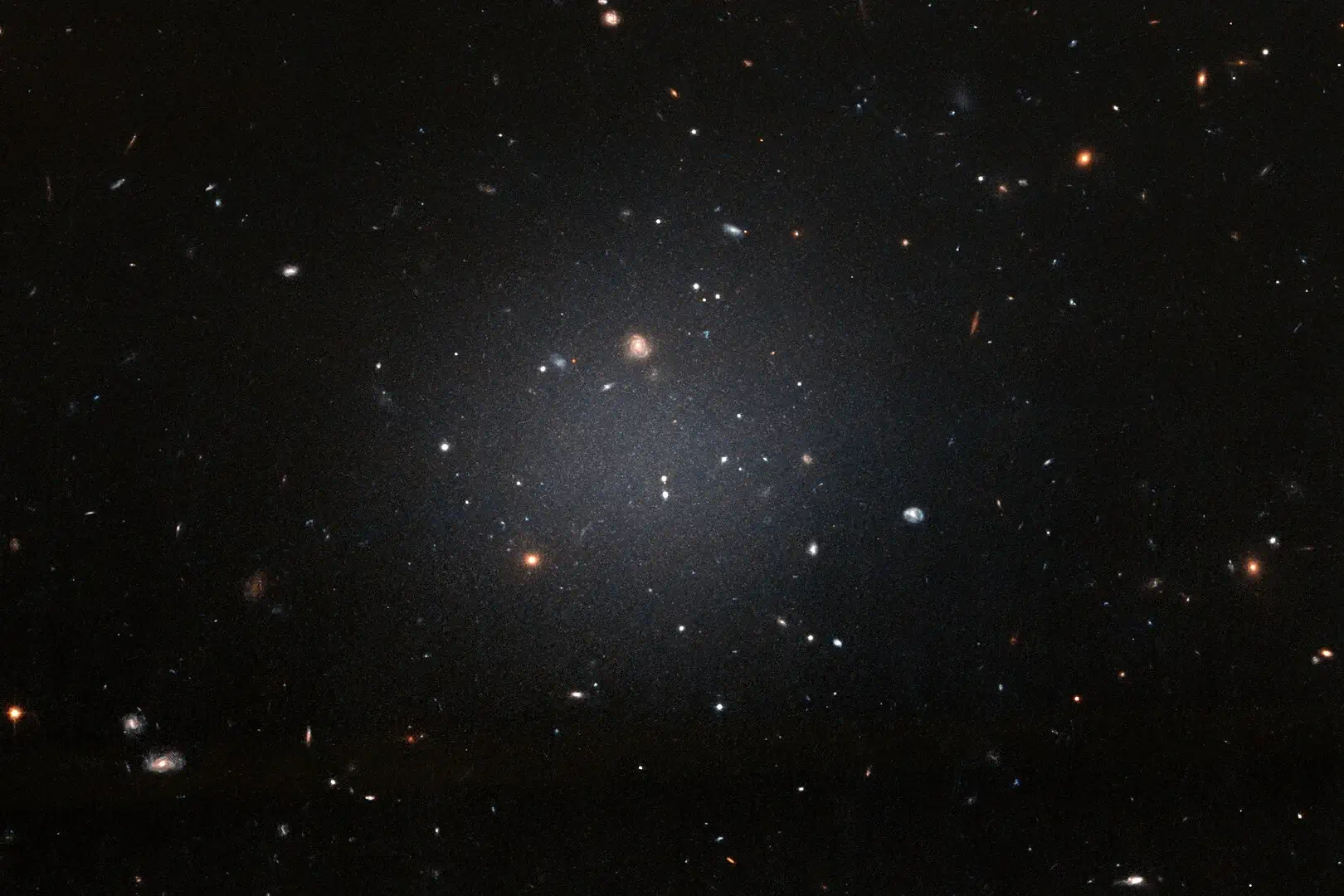
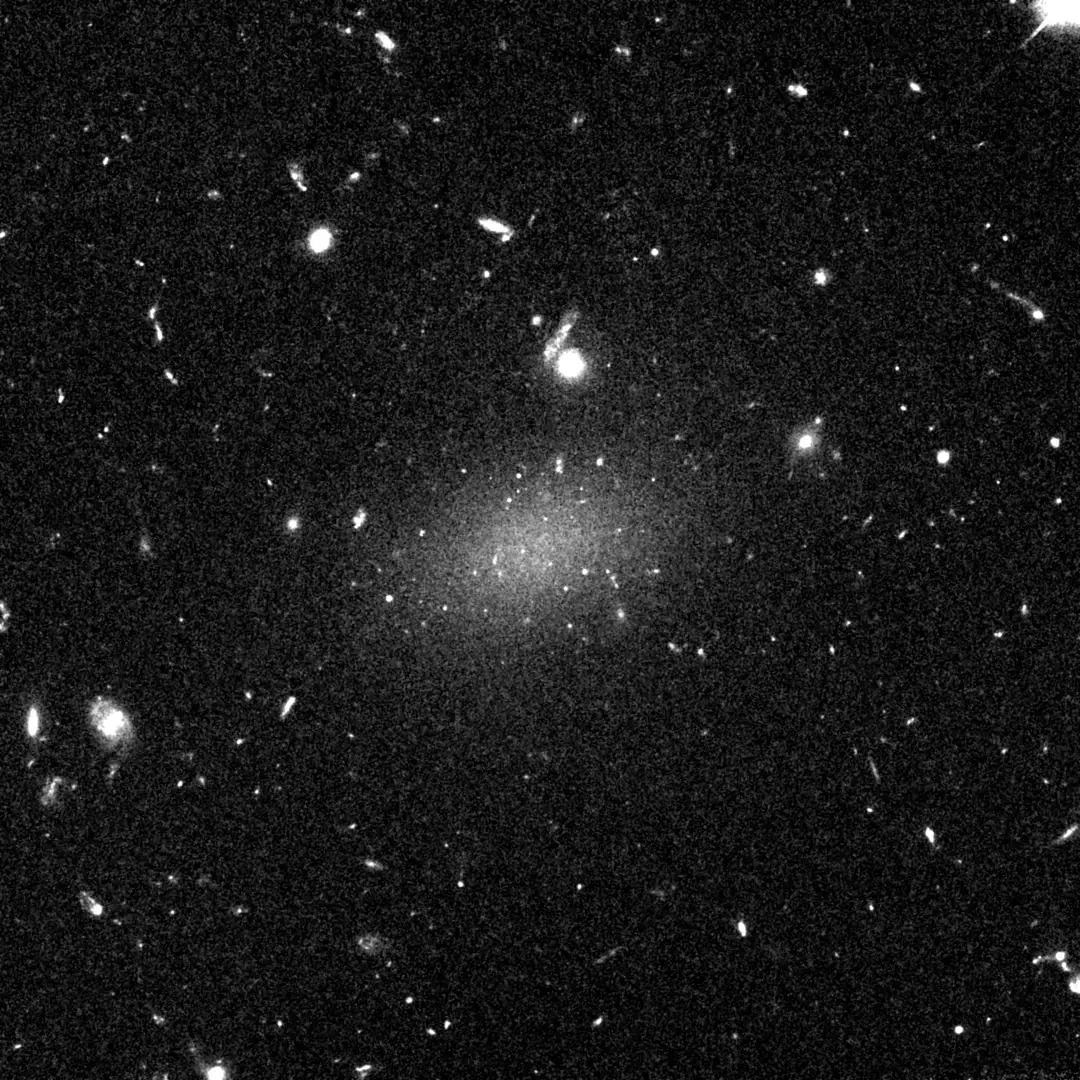
NGC 1052-DF2
Dragonfly 44
What happens if two galaxies collide?

The collision of two or more galaxies varies depending on the size, velocities, composition, and collision angles of the galaxies. As a result of galaxy mergers, one galaxy may be swallowed, or a larger and different galaxy may emerge. Furthermore, depending on the amount of material they contain, galaxies that collide may enter the starburst phase.
Classification of galaxy collisions:
Dual Merger: Two galaxies merging.
Multiple Combinations: Three or more galaxies merging.
Small Merger: One of the colliding galaxies is smaller and is swallowed by the larger galaxy.
Great Unification: The merger of two galaxies of similar size. If they collide at the right angle and speed, an elliptical galaxy is formed.
Wet Joint: It is the merger of blue, or gas-rich, galaxies. It transforms disk galaxies into elliptical galaxies and triggers quasars.
Dry Combination: It is the merger of red galaxies, which are gas-poor galaxies. The merger does not result in a stellar explosion phase, but the stellar mass increases significantly.
Moist Combination: It is the merger of two galaxies with similar gas concentrations.
Mixed Merger: It is a merger of red and blue galaxies, one with a low gas concentration and the other with a high gas concentration.
How are galaxies observed?
Observing galaxies is a multifaceted process involving the use of various tools and techniques to collect data across different parts of the electromagnetic spectrum. This comprehensive approach allows astronomers to gain a deeper understanding of the properties, structures, and evolution of galaxies in the universe.
The main methods and tools used to observe galaxies are:
Optical Telescopes
Radio Telescopes
Infrared Telescopes
X-ray Telescopes
Ultraviolet Telescopes
Space Telescopes
Spectroscopy
Radio Interferometry
Gravitational Lensing
Computer Simulations
Multi-Wavelength Research
Adaptive Optics
Galaxy Redshift
Solar System Probes
Submillimeter Astronomy
Integral Field Spectroscopy
Time Domain Astronomy
Very Long Baseline Interferometry (VLBI)
Optical Telescopes
Optical telescopes are perhaps the best-known tools for observing galaxies. They use visible light and can reveal the shapes, colors, and details of galaxies. These telescopes can range in size from small amateur telescopes to large professional observatories.
Radio Telescopes
Radio telescopes detect radio waves emitted by galaxies. These radio waves provide information about celestial objects that are invisible in the optical spectrum, such as cold gas, dust, and cosmic microwave background radiation.
Infrared Telescopes
Infrared telescopes are designed to observe the heat, or thermal radiation, emitted by galaxies. This helps astronomers study cold objects, such as the dusty regions of galaxies, and allows for the observation of objects hidden by dust clouds.
X-ray Telescopes
X-ray telescopes are used to observe high-energy X-rays emitted by hot gas and supermassive black holes in galaxy clusters. These observations provide information about extreme conditions within galaxies.
Ultraviolet Telescopes
Ultraviolet telescopes are used to study ultraviolet radiation emitted by galaxies. These observations help astronomers understand the life cycles of stars and the processes occurring within galaxies.
Space Telescopes
Space telescopes, such as the Hubble Space Telescope or the James Webb Space Telescope, offer the unique advantage of being above Earth's atmosphere, which can distort and absorb light. Space telescopes can capture the most detailed and stunning images of galaxies.
Spectroscopy
Spectroscopy is a technique used to separate light into its constituent components, allowing astronomers to determine a galaxy's composition, temperature, density, and motion. Spectroscopic observations provide information about the structure and dynamics of galaxies.
Radio Interferometry
Radio interferometry combines data from multiple radio telescopes to create high-resolution images. This technique is particularly useful for studying radio emissions from galaxies and their central supermassive black holes.
Gravitational Lensing
Gravitational lensing occurs when the gravitational field of a large object, such as a galaxy cluster, bends and magnifies light from background galaxies. This effect is used to study distant galaxies that are too faint to be observed.
Computer Simulations
Computer simulations are an important tool for understanding galaxy formation and evolution. Researchers use complex models to simulate the processes that shape galaxies over cosmic time.
Multi-Wavelength Research
Large-scale surveys, such as the Sloan Digital Sky Survey (SDSS) and the Pan-STARRS project, collect data simultaneously at multiple wavelengths. These surveys provide comprehensive information about the distribution and characteristics of galaxies.
Adaptive Optics
Adaptive optics is a technology used in ground-based telescopes to correct for the blurring effects of Earth's atmosphere. It allows astronomers to obtain sharper images of galaxies and other astronomical objects.
Galaxy Redshift
Measuring the redshift of a galaxy's light is a technique used to determine its distance and speed. Redshift is used to study the expansion of the universe and the movement of galaxies within it.
Solar System Probes
Spacecraft missions designed to study objects in our solar system, such as the Voyager probes and New Horizons, also gather data about distant galaxies during their journeys.
Submillimeter Astronomy
Submillimeter telescopes observe galaxies in the submillimeter wavelength range to study the cold gas and dust in regions where new stars are forming.
Integral Field Spectroscopy
This technique provides 2D spectra of galaxies, allowing astronomers to study the spatial distribution of different elements and the velocity of stars and gas within a galaxy.
Time Domain Astronomy
Observing galaxies over time allows us to understand their dynamic behavior. Telescopes and instruments dedicated to monitoring events such as supernovae and gamma-ray bursts contribute to this field.
Very Long Baseline Interferometry (VLBI)
VLBI combines data from radio telescopes around the world to create extremely high-resolution images. It is used for precise measurements of galaxy positions and to study active galactic nuclei.
How can galaxies be distinguished from nebulae?
The fundamental difference between galaxies and nebulae lies in their basic structures as well as their extreme sizes. A nebula is a cloud of dust and gas, typically tens to hundreds of light-years wide. A galaxy is much larger, usually thousands to hundreds of thousands of light-years wide. Furthermore, a galaxy is a structure where billions of stars orbit around a central point. Nebulae, on the other hand, are regions of space filled with gas and dust.
Galaxy Colors and Their Significance
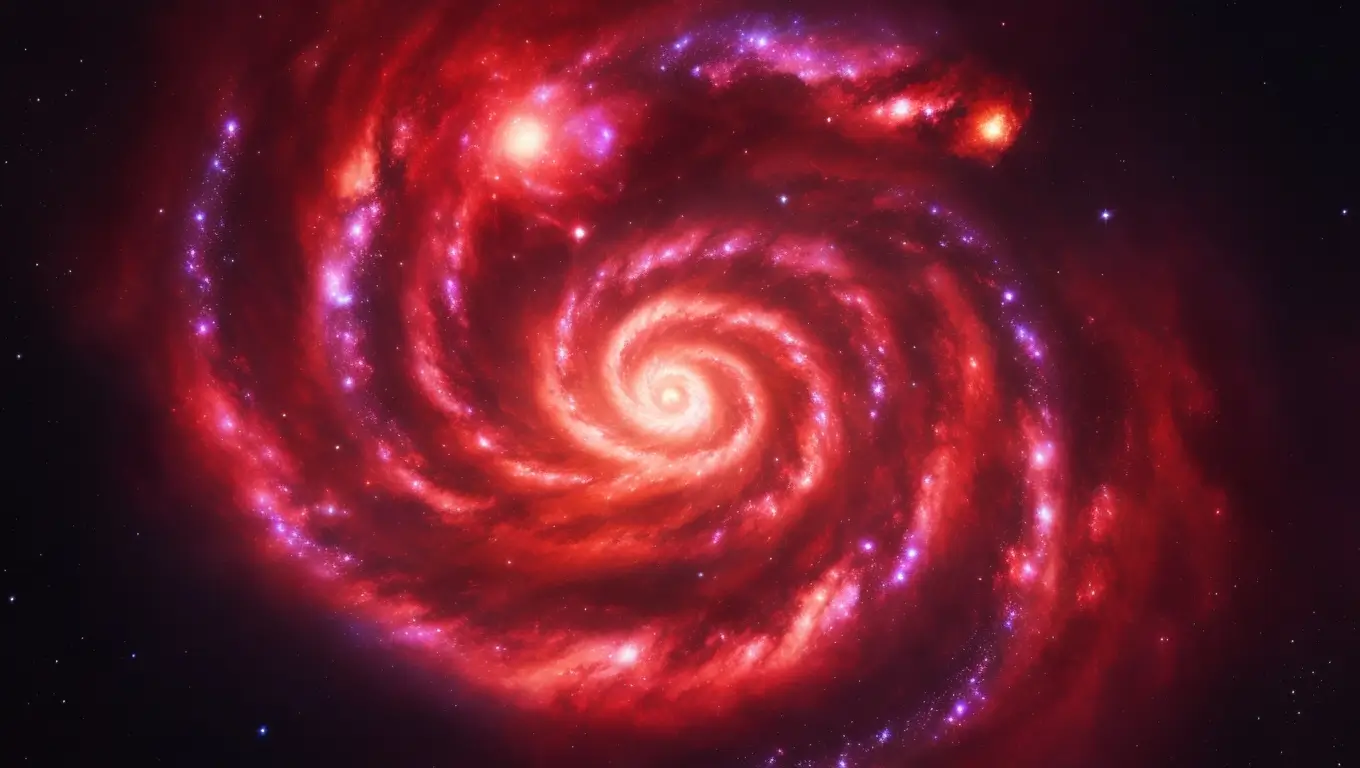

These are representative images.
Galaxies are divided into two main colors : blue and red. These two colors tell us about the characteristics of galaxies. Blue galaxies have high brightness, mass, and temperature because they are actively forming new stars.
Red galaxies, on the other hand, have lower brightness, mass, and temperature because they do not actively form stars. If you ask, "What does a redshift in a galaxy indicate?", it means that the galaxy is nearing the end of its life. Because it lacks gas reservoirs to form new stars, and its stars reach the end of their lives and transform into faint red giants.
Which galaxy is Earth in?

The galaxy in which Earth is located is the Milky Way Galaxy. In fact, the galaxy our Earth is in is a red galaxy. However, scientists say that the Milky Way Galaxy is very bright for a red galaxy, but somewhat fainter compared to other galaxies. Generally, the light from the Milky Way is very close to the color of a standard incandescent light bulb and falls within the range that the human eye perceives as white.
What is the closest galaxy to Earth?

The closest galaxy to Earth in the Milky Way galaxy, based on our location within it, is the Canis Major Dwarf Galaxy. Also considered the closest galaxy to the Milky Way, the Canis Major Dwarf Galaxy is only 25,000 light-years from Earth and 42,000 light-years from the center of the Milky Way. Not the Andromeda Galaxy!
What is the largest galaxy in the universe?
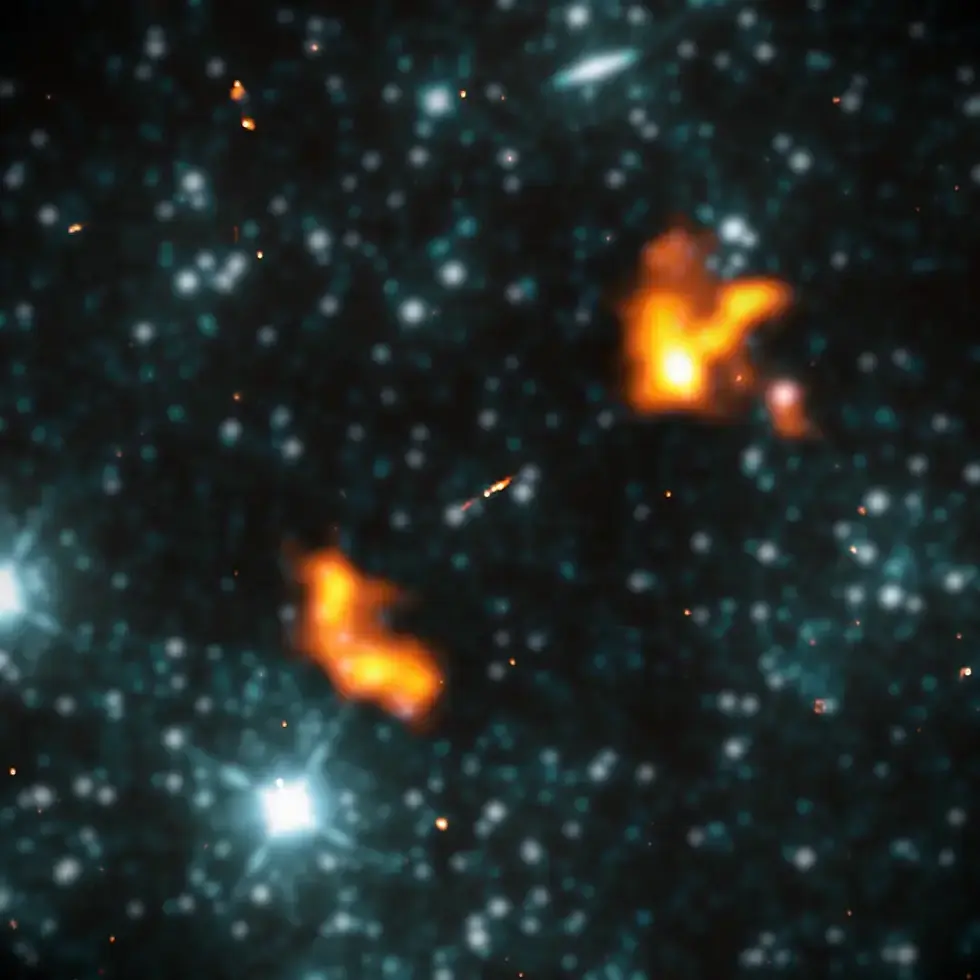
The largest galaxy in the universe is Alcyoneus, located 3.5 billion light-years away. This massive structure measures 5 megaparsecs (16 million light-years) from one end to the other. Alcyoneus was discovered using the Low Frequency Array (LOFAR) telescope in the Two-metre Sky Survey and reported in a paper published in February 2022.
What is the smallest galaxy in the universe?

The smallest galaxy in the universe is the dwarf galaxy Segue 2, with a diameter of approximately 34 parsecs (110,893 light-years). Segue 2 is one of the Milky Way's satellite galaxies and is located 110,000 light-years from us. Its name comes from its discovery during the Sloan Digital Sky Survey (SEGUE), which aimed to create a three-dimensional map of the universe.
What is the oldest galaxy in the universe?

The oldest galaxy in the universe is GLASS-z12, which formed 400 million years after the Big Bang. Discovered by the James Webb Space Telescope in July 2022, this galaxy is 13.76 billion years old. GLASS-z12 is normally 13.6 billion light-years away from us, but due to the expansion of the universe, its current distance is 33.2 billion light-years.
What is the youngest galaxy in the universe?
Because almost all galaxies in the universe formed at nearly the same time, it's currently uncertain which galaxy is the youngest. In the past, a galaxy called I Zwicky 18, discovered by the Hubble Space Telescope, was thought to be 500 million years old. However, subsequent observations revealed faint stars within this galaxy, increasing the likelihood that Zwicky, like other galaxies, formed at the same time.
What is the most distant galaxy in the universe?

The most distant galaxy in the observable universe is HD 1, located 13.463 billion light-years from Earth. However, accounting for the expansion of the universe, its current distance from us is 33.288 billion light-years. Discovered in April 2022, this galaxy is also thought to be one of the earliest galaxies to have formed after the Big Bang.
I'm so happy to share this incredible information about galaxies with you. Even if no one asks you what a galaxy is, I hope you'll bring up the topic and freely share this amazing knowledge with others!


