


What are Planets, How do they Form, What Types There are, and More?
- Mar 20
- 14 min read
Updated: Mar 21
What is a planet? How do they form, and what happens during this process? Do planets have different types or specific characteristics? How many planets are there in the observable universe? What conditions make a planet habitable? Galaxy Explorer is here to answer these questions!
Contents
What are the planets?
Planets are trillions of round astronomical bodies "suspended in the air" throughout the vast universe, each with environmental conditions that may or may not be suitable for life. Their round shape is due to the force of gravity.
Characteristics of Planets
They must be large enough and have enough gravity to form a spherical shape.
They must be large enough to eliminate the gravitational pull of other objects of similar size near their orbit.
They mostly orbit a star or a central point in a stationary position.
They usually rotate around their own axis as well.
They do not emit light like stars or other celestial bodies.
There are varying axial tilts.
They usually have an atmosphere.
Some have a magnetosphere.
It may have rings composed of dust, ice, and rocks.
They might have satellites.
How did planets form?
Planets form through the interaction of tiny particles of gas and dust, smaller than a human hair, that form rings around stars. This ring is called the protoplanetary disk. However, it's not gases that trigger these interactions, but tiny pieces of rock. As these rock fragments rotate in the disk and pass side by side, the gases between them twist and interact. The resulting current causes the rock fragments to coalesce . As the resulting rock or ice fragment continues to rotate, it incorporates surrounding gas, dust, and rock fragments , laying the foundation for the planet that will form.
The newly formed center then begins to attract and gather all the gas, dust, and rock particles in its orbit. Additionally, other centers in the disk may merge. Over time, mergers occur, and after tens of thousands or millions of years, planet formation is complete. The planets in our solar system formed in this way.
Factors Influencing Planet Formation
The distance of the gas disk from the star is the most important factor influencing the formation of a planet. If the orbit in which the gases rotate is far away, water particles can freeze , forming small pieces of ice with dust adhering to them. Also, because the environment is cold, surrounding gases are attracted to each other , and these gas groups cling to the circulating ice particles or are drawn towards the planet's core. As a result, gas planets like Jupiter, Saturn, Uranus, and Neptune emerge.
As a chain reaction to the previous scenario , the gaseous planets that form continue to absorb most of the gas and celestial bodies in their orbits. As a result, in orbits closer to the star, i.e., the inner orbit, rock fragments interact with each other more than gas, creating an additional center. The result of these progressively growing centers is called terrestrial planets.
The First Planet to Form in the Solar System and the Sequence of its Formation
Jupiter was the first planet to complete the formation race in the Solar System. Saturn came in second. Uranus and Neptune are thought to have formed later because they are gas planets. Finally, the hotter, inner-orbiting terrestrial planets; Mercury, Venus, Mars, and Earth are known to have formed last. There is no definitive information about the order in which the planets formed in the Solar System.
Which celestial bodies do the planets orbit?
Planets orbit around the central point of their system. This central point can be a star, a black hole, or a pulsar. On the other hand, some planets orbit around nothing and are nicknamed "rogue planets."
How many planets are there in the universe?
Swedish astrophysicist Erik Zackrisson, using a computer that simulates the evolution of the universe after the Big Bang, found that there are approximately 700 quintillion (700,000,000,000,000,000,000) planets in the universe .

Classic Planet Types
There are many different types of planets in the universe , and they all have various distinguishing characteristics, just like us humans. A planet's structure; its size, mass, surface and internal features, gravity, orbit, rings, or lack thereof, all help us learn about its type. There are two main and two secondary types of planets: Terrestrial and Gas planets, and Earth-like and Hypothetical planets.
Terrestrial Planets
Terrestrial planets are planets with rocky surfaces . They don't have rings because their frozen ice and dust melt as they orbit close to their star. However, they have compressed radiation belts , also known as Van Allen belts, thanks to their magnetic fields. The Van Allen belt acts as a shield for the planet against harmful radiation emitted by the star.
Gas Planets
Also known as Jovian planets, gas giants are best exemplified by Jupiter, Uranus, and Neptune. Their composition is mostly hydrogen, with some helium, trace gases, and ice . Their cores are small and solid, but mostly gaseous. They possess magnetic fields, rings, and numerous moons.
World Analogous
As the name suggests, Earth-like planets are those that orbit a star in the habitable zone, have a size, surface, and atmosphere similar to Earth, and can support liquid water. Theoretically, the existence of life on such planets is high, but it cannot be proven due to space-time constraints. For example, even if a life form on such a planet were to reach the level of a type 2 civilization, it is highly unlikely that we would be able to observe it.
For example, Kepler-452b, the planet most similar to Earth, is 1,402 light-years away. This means that our observations of this planet will be 1,402 years (511,730 Earth days) behind. The planet may already be gone, or its inhabitants may have been involved in a nuclear war. Who knows?
Hypothetical Planets
As the name suggests, hypothetical planets are celestial bodies whose existence was predicted, some of which turned out to be real and others not. This category is more complex than other types of planets because it consists of theories and inaccuracies. For example , Neptune was a hypothetical planet until its discovery, but it has been proven to be real. On the other hand, the discovery of non-existent planets and the labeling of meteors as planets have occurred in the past, which is why this category was formed.
Types of Planets According to Their Mass
Some planets may look similar from the outside, but their masses are not the same. For example, consider a planet smaller than Earth, but with a higher density. This depends entirely on the factors that make up the planet. In short, planet types according to their masses:
Gas Giants
Ice Giants
Little Neptunes
Super Worlds
Little Worlds
Super Jupiters
Gas Giants
They are large planets composed of hydrogen and helium. Gas giants are also called “failed stars” because they contain the same basic components as stars. Their failure stems from the fact that they are not large enough to have the internal pressure and temperature necessary for hydrogen to convert into helium, which is the energy source that powers the Sun and most other stars. There are two gas giants in the Solar System: Jupiter and Saturn.
Ice Giants
Ice giants are massive planets composed of elements heavier than hydrogen and helium, such as oxygen, carbon, nitrogen, and sulfur. Their mass averages between 14 and 17 Earth masses.
There are two ice giants in the Solar System: Uranus and Neptune. However, currently, these two planets are mostly composed of gas and liquid, so why are they categorized as ice giants? Because the compounds that make up these planets were either solid as direct ice or trapped within water ice during their formation.
Little Neptunes
Small Neptunes are also known as gas dwarfs or transitional planets . They are Neptune-like planets with less mass than Neptune, possessing a thick hydrogen-helium atmosphere with deep layers of ice, rock, or liquid oceans.
Super Worlds
The "Super-Earth" category is used solely to describe the size and mass of a planet . It's not simply a planet that is Earth-like but larger. Super-Earths are planets that are larger than Earth in diameter (12,742 km) and have a greater mass than Earth (5,972 × 10^24 kg). They can often be twice the size of Earth but cannot have a mass greater than that of ice giants.
Super-Earths can have a composition of gas, rock, or a mixture of both. They are not found in our Solar System, but they are a very common type of planet in the universe.
Little Worlds
This group, which includes Mercury and Mars, describes planets with smaller masses than Earth and Venus . These planets are difficult to find because of their small size and the low amount of energy they emit into space.
Super Jupiters
Super-Jupiters are planets that have a mass greater than Jupiter's (317.8 Earths) and are on the verge of being brown dwarfs . They may be the same size as Jupiter but have masses equivalent to 80 Jupiters. Their high density compresses the planet and prevents it from growing.
Types of Planets According to Their Orbits
Planets have various orbits and can be classified accordingly. The fact that Earth and the other seven planets revolve harmoniously around the Sun should not lead us to believe that all planets have such orbits. Planet types according to their orbital rotations:
Planets with Two Stars
Binary Planets
Eccentric Jupiters
Inner and Outer Planets
Goldilocks Planets
Hot Neptunes
Lower and Upper Cluster Planets
Pulsar Planets
Rogue Planets

Planets with Two Stars
When a binary star system has planets orbiting around it, these planets are called bistellar planets. As evidence, PSR B1620-26 in Messier 4 orbits a chasing millisecond pulsar and a white dwarf. Another example is the gas giant in the HD 202206 system orbiting a Sun-like star and a brown dwarf.
Binary Planets
Binary planets are dependent planets that share an orbit around a central point and also orbit each other. They are dependent because they need each other's gravitational pull to remain in their orbits. For this to happen, the mass of both planets must be close to 1, or equal; otherwise, one becomes the other's satellite.
Eccentric Jupiters
Eccentric Jupiters are gas giants that orbit their star in an ellipse rather than a perfect circle. These planets, with their enormous mass, can push inner planets like Earth out of orbit. For example, HD-96167b in the Solar System is an eccentric Jupiter.
Inner and Outer Planets
These two categories are used for the planets in the Solar System . Mercury, Venus, Earth, and Mars, which are close to the Sun and have terrestrial bodies, are considered inner planets. The outer planets are the category used for Jupiter, Saturn, Uranus, and Neptune, which are further from the Sun.
Goldilocks Planets
Goldilocks planets are similar to inner planets but are specifically designed to meet habitable zone conditions based on their distance from the star they orbit. For example, Earth is both an inner and a Goldilocks planet.
Hot Neptunes
Hot Neptunes are planets with masses similar to Neptune or Uranus that orbit closer to their stars than Earth orbits the Sun. Because they are close to their stars, they can be easily found through astronomical observations focused on transits.
Extremely Hot Neptune: Despite having twice the mass of Neptune, LTT-9779b orbits its star very close, completing a full orbit in 0.8 Earth days and having an average temperature of 5171.85°C.
Lower and Upper Cluster Planets
Similar to the inner and outer planets, the positions of the planets in the Solar System form a superior-subordinate relationship. If one planet's orbit is farther than another's, that planet is in the superior cluster relative to the star, while the other planet is in the inferior cluster. More simply, Earth is in the superior cluster relative to Mercury but in the inferior cluster relative to Mars.
Pulsar Planets
Planets orbiting around pulsars are called pulsar planets. These planets are extremely rare in the universe ; only six have been discovered so far. Pulsars are formed by the destructive force of explosions from stars with masses 8-25 times that of the Sun. Planets orbiting these stars usually do not survive the explosion; even if they do, they leave the system because they no longer have a central point.
Rogue Planets
Rogue planets are planets that are not bound to any star or planet and wander through the universe. These planets may have separated from their parent planet or formed outside of any system.
Planets Classified by Structure
Planets are also categorized according to their formation structure and surfaces. Those who have seen Interstellar or Dune will have a more or less clear idea about this. But whether a planet has water or a desert surface is not our only criterion; there is more to it. The classification of planets according to their structure is as follows:
Chthonian Planets
Carbon Planets
Planets Without Cores
Desert Planets
Helium Planets
Planets of Hiyanus
Ice Planets
Iron Planets
Lava Planets
Water Planets
Hot Jupiters
Protoplanets
Silicate Planets

Chthonian Planets
Chthonian planets form when a gas giant sheds its hydrogen and helium atmosphere, an event called hydrodynamic escape. This is triggered by the planet's proximity to its star. The remaining rocky or metallic core resembles that of terrestrial planets.
Carbon Planets
Carbon planets are theoretically planets that contain more carbon than oxygen . Marc Kuchner and Sara Seager coined the term "carbon planet" in 2005. Previous research suggests this is possible. In 2020, it was found that 12% of 249 nearby Sun-like stars had a carbon-to-oxygen ratio of 0.65, while 55 Cancri e planets had a ratio of 0.78. These findings indicate that carbon planets could exist.
Planets Without Cores
Coreless planets are theoretically planets that lack a core and have a massive rocky layer. These planets form in cooler, more distant regions of space. According to Sara Seager's 2008 article, planets without cores form in two ways:
In the first hypothesis, a planet is composed of oxidized, water-rich material where all metallic iron is bonded to silicate mineral crystals. Such planets could form in regions cooler than the central star.
The second hypothesis suggests the planet is composed of material that is both rich in water and rich in iron metal. Iron reacts with water to form iron oxide and release hydrogen before a core forms. The iron droplets, being sufficiently well mixed and small, cause the iron to oxidize and become compressed in the mantle, unable to form a core. Therefore, the resulting structure lacks a core.
Desert Planets
Also known as dry, arid, or dune planets, they are a type of terrestrial planet with a surface consistency similar to Earth's hot deserts. Mars is the only example of a desert planet in the Solar System. Surprisingly, studies show that desert planets have a greater potential for a habitable zone than water planets.
Helium Planets
Helium planets are planets that have a helium-dominant atmosphere . Unlike Jupiter and Saturn, the atmospheres of these planets are composed primarily of hydrogen, with helium being only a secondary component.
For a helium planet to form , it needs to orbit close to its star and hydrogen needs to evaporate . The star acts as a filter, vaporizing lighter gases from the planet, removing heavier gases, and consuming the hydrogen. Over time, the planet is left with a large amount of helium. This type of event is called atmospheric escape.
Planets of Hiyanus
Hianus planets are hypothetical planets with hydrogen atmospheres, hot climates, and covered in water. They are also known as ocean planets. These types of planets are thought to be common around red dwarf stars. Furthermore, because they are a kind of water planet, they pique the interest of scientists regarding extraterrestrial life.
Ice Planets
These are planets with an icy cryosphere (surface) composed of volatile substances such as water, ammonia, and methane. Many icy planets have subsurface oceans that are likely heated by internal heat or tidal forces from another nearby body. If the planet's habitable conditions are suitable, the subsurface water has the potential to support life, including fish, plankton, and microorganisms. However, it is not possible for living things like humans to live on such a planet.
Iron Planets
Iron planets, often referred to as "cannonballs" in science fiction , are a type of planet with an iron-rich core and little to no mantle. Iron-rich planets are smaller and denser than other types of planets of comparable mass. Because they cool rapidly after forming, they do not have plate tectonics or a strong magnetic field.
Lava Planets
Lava planets are a type of terrestrial planet whose surface is mostly or entirely covered in molten lava. These planets may have experienced a collision shortly after their formation or may have been subjected to intense radiation and tidal forces due to being very close to their star.
Water Planets
A panthalasic planet, also known as a sea world, water world, or water planet, is a type of planet that contains a significant amount of water, either below or on the surface, in the form of oceans as part of its hydrosphere. While planets with conditions that could support liquid water have recently been discovered, there is no certainty. This is because the technology we currently use cannot directly observe the surfaces of planets. Estimates are made based on water vapor in the atmosphere.
Hot Jupiters
Hot Jupiters are gas giants similar to Jupiter, but they are much hotter because they orbit their stars very close to their orbits. These planets can have masses ranging from 0.36 to 11.8 times that of Jupiter. Their complete orbits can be as short as 1.3 to 111 Earth days. Their daytime temperature averages 2,427°C, and their nighttime temperature averages 2,300°C. Most of them generally have the same face pointing towards their star during orbit, meaning they are gravitationally locked.
Protoplanets
Also known as pre-planets, protoplanets are technically not planets but rather embryos of planets.
Protoplanets form in the orbit of gas, dust, and small rocks that revolve around stars. This disk orbits a star and is either cold or hot depending on its position. You can think of the protoplanetary disk as the womb and the planets as the children. Here, gases and rocks interact and merge to form small structures. These structures at the beginning of this merging process are called protoplanets.
Silicate Planets
Silicate planets are planets that have rocky crusts based on silicate and metallic cores, such as Venus, Earth, and Mercury.
The "Biggest" Planets in Our Universe
Now let's move on to the smallest, most distant, and largest planets in our universe. But be prepared, because these figures are quite astonishing compared to our planet Earth!
What is the largest planet in the universe?

ROXs-42Bb, with a diameter of 357,440 km, is the largest planet in the universe and a gas giant. For comparison, its diameter is 2.5 times that of Jupiter (142,800 km) and 28 times that of Earth (12,742 km).
Date of discovery: 2013
What is the smallest planet in the universe?

Kepler-37b is the smallest planet in the universe. With a diameter of 3,860 km , it is slightly larger than the Moon, slightly smaller than Mercury, and about 30% the size of Earth .
Date of discovery: 2013
What is the coldest planet in the universe?

The coldest planet in the universe , Uranus in our Solar System, with its temperature of -224°C, leaves all other planets "ice cold." Uranus is so cold because billions of years ago it suffered a massive impact, causing it to lose energy in its core. Its distance from the Sun (ranked 7th) also plays a part in its coldness.
What is the hottest planet in the universe?

Kelt-9b, with a temperature of 4,300°C , is the hottest planet in the universe and an extremely hot Jupiter. Although 2.8 times the size of Jupiter, it is half as dense. This is because it experiences atmospheric escape due to its close orbit around its star.
Date of discovery: 2017
What is the strangest planet in the universe?

Imagine a Saturn that's taken its rings a step further and is on steroids. Yes, super-Saturn J1407b is one of the strangest planets in the universe. J1407b has more than 30 rings with a total diameter of 123 million km. That's 200 times larger than Saturn's 270,000 km rings.
Date of discovery: 2012
What is the oldest planet in the universe?

PSR B12620-26 b, with an estimated age of approximately 13 billion years, is the oldest known planet in the universe. Besides being the oldest planet discovered, PSR B12620-26 b also holds the title of the first confirmed circular planet.
Date of discovery: 1993
The Youngest Planet in the Universe

V830 Tauri b, at two million years old, is considered the youngest planet in the universe . To better understand how young it is, Earth is 4.5 billion years old and the Sun is 4.6 billion years old.
Date of discovery: 2016
What is the farthest planet in the universe?
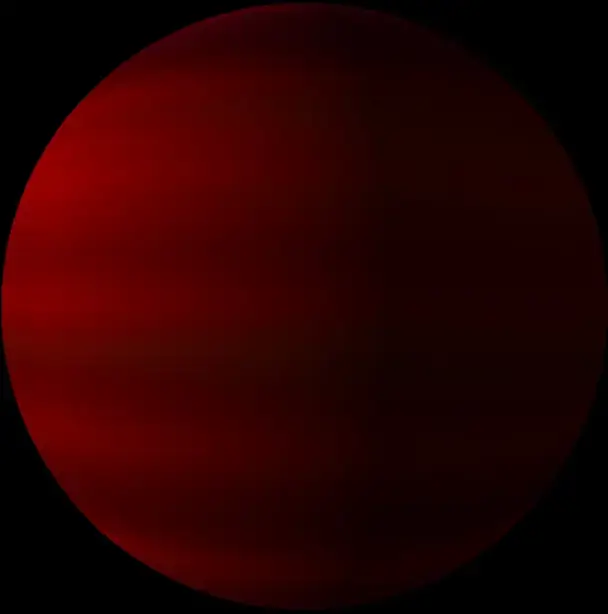
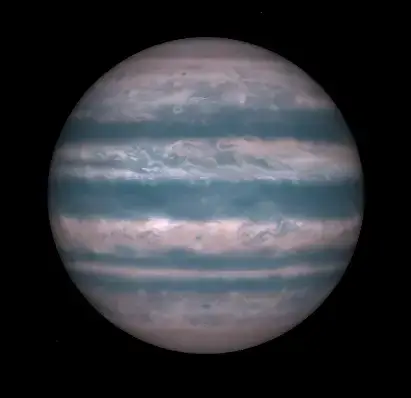
The most distant planets from Earth: SWEEPS-11b (left) and SWEEPS-4b (right)
SWEEPS-11b and SWEEPS-4b, located 27,710 light-years from Earth, are the most distant planets in the universe for humans. They were discovered in 2006 through transit observations by the Sagittarius Window Eclipsing Extrasolar Planet Search (SWEEPS) program.
Date of discovery: 2006
As you can see, the question "What are planets?" actually opens up many topics. There are countless spheres in the universe still waiting to be discovered, but of course we don't have the time or technology to discover them all. So, be careful while you're exploring, don't let the gas planets get away! I hope I've been able to teach you something as Galaxy Explorer. See you in my next blog!


