


White Light Haters, Assemble! What Are Artificial Light Sources?
- Mar 23
- 6 min read
I explained the natural light sources in our universe and on our planet in my previous blog; now it's time to answer the question: What are artificial light sources? Before diving into the topic, let me give you a little spoiler: In my next blog, I will explain what is the difference between natural light sources and artificial light sources. Anyway, I'm a little tired these days, and the inner voice in my head is resisting fiercely not to write this blog. Sir/Ma'am, here's the quickest way to explain what artificial light sources are and what their examples are.
Contents
What is Artificial Light?
Light sources produced by humans or any civilization are called artificial light sources. Unlike natural light sources, artificial light sources are controllable: they can be turned on or off, their brightness can be dimmed or increased. Additionally, artificial light sources must draw energy from external sources to illuminate the environment. When energy supplies are interrupted or disrupted, they become "dead-ahh light sources."
What are Artificial Light Sources?
Here is a quick table listing all artificial light sources we have used in history:
Light Source | Date of Invention |
Primitive Lanterns | BCE ~70,000 |
Oil Lamp | BCE ~1,500 |
Candle | BCE 1,000 - 3,000 |
Fireworks | BCE ~200 |
Torch | AD 40 - 60 |
Lighter | 1823 |
Match | 1827 |
Bulb | 1879 |
Headlights | 1880s |
Plasma Lamb | 1890s |
Flashlight | 1899 |
Incandescent Light Bulb | 1904 |
Metal Halide Lamp | 1912 |
Low-Pressure Sodium Vapor Lamp | 1920 |
Fluorescent Lamp | 1926 |
Tube Light | 1927 |
Laser Light | 1960 |
Visible LED Light | 1962 |
High-Pressure Mercury Vapor Lamp | 1965 |
Primitive Lanterns
Around 70,000 years BCE, early humans created the first lamps by filling hollow rocks, seashells, and other natural objects with moss, dipping the moss in animal fat, and igniting it. These raw lights are known as "animal lamps".

Oil Lamp
The existence of lanterns dates back to around 1500 BCE, during the reign of King David, and extends to the Iron Age when Canaanite oil lamps were used for approximately a thousand years.
Candle

By around 3000 BCE, the Egyptians and Romans were producing candles by dipping papyrus in melted tallow or wax to light their homes and streets, as well as to keep time during ceremonies and religious rituals.
Firework

Many historians believe that fireworks were first developed in ancient Liuyang, China, in the second century BCE. It is believed that the first natural "fireworks" were bamboo stems that, when thrown into a fire, exploded with a loud noise due to the overheating of the hollow air pockets inside the bamboo. The Chinese believed that these natural "fireworks" drove away evil spirits.
Torch

In ancient times, torches were typically made by taking a bundle of long, dry plant fibers, such as reeds or twigs, and binding them together at one end. The other end of the bundle was then dipped into a flammable liquid, such as animal fat or pitch, and set on fire. Thus, a flame was obtained that could be used to light a fire or a lamp.
Some cultures have used other materials to make torches. For example, Native American tribes in the southwestern United States made torches by wrapping dry yucca tree leaves around a stick and lighting the end. In ancient Greece and Rome, torches were made by dipping a bundle of twigs or other plant fibers into melted wax or resin and then letting them harden.
Lighter
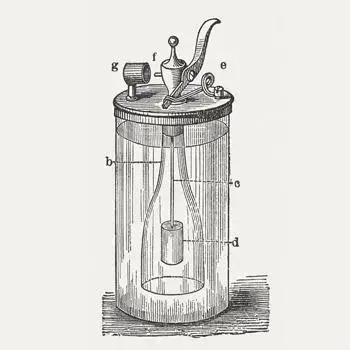
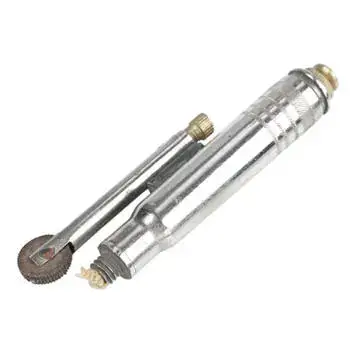
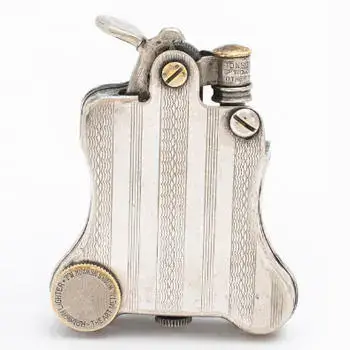
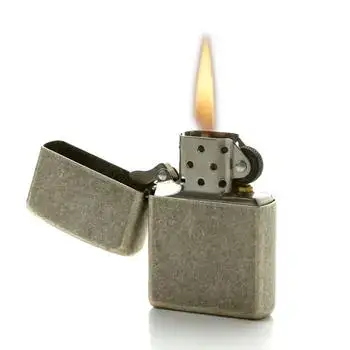
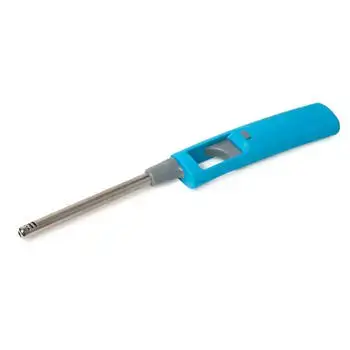
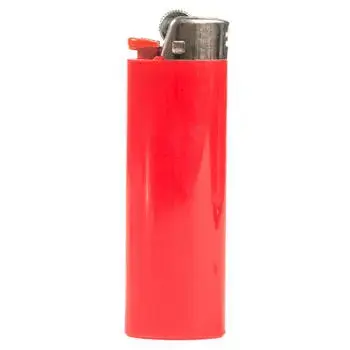
In 1823, Johann Wolfgang Döbereiner, a German chemist and professor at the University of Jena, invented one of the first lighters; however, it bore no resemblance to modern lighters. The lamp, also known as a "matchbox" (or Feuerzeug), was an extremely popular product and is reported to have sold over one million units in the 1820s.
This odd-looking device worked by reacting zinc with dilute sulfuric acid to produce hydrogen. To use it, a valve was lifted and the hydrogen was ignited toward a porous platinum form known as a "platinum sponge." This then reacted with oxygen, heating the platinum and igniting the hydrogen, resulting in a stable flame.
Matches

The first friction matches were invented by English chemist and pharmacist John Walker. The first sale of this type of match was recorded in a notebook dated April 7, 1827. The tips of Walker's "Friction Lights" were coated with potassium chloride-antimony sulfide paste, which ignited when scraped between a layer of sandpaper.
Light Bulb

British chemist Humphry Davy invented the first electric light in 1802. After conducting experiments with electricity, he invented an electric battery and, when he connected wires to a carbon piece using this battery, he caused the carbon to glow and emit light. Its invention was known as the "Electric Arc Lamp".
Headlights

The earliest headlights began to be used in the late 1880s and were lit by acetylene or oil. Acetylene lamps became popular among manufacturers because the flame was resistant to wind and rain. Mirrors were placed behind the flame to focus the light forward, but the beam itself was not particularly focused.
Plasma Lamp

Nikola Tesla, a prolific inventor and electrical engineer, developed and patented the "inert gas discharge tube" in the 1890s to compete with Thomas Edison's incandescent light bulb. Tesla produced plasma and light using high-voltage, high-frequency current in an evacuated glass bulb. Tesla referred to his invention as an "inert gas discharge tube."
Flashlight

In 1899, British inventor David Misell invented the first flashlight. It had three D-cell batteries housed in a tube that served as the handle of the device. The batteries powered a small incandescent electric bulb, and a simple contact switch turned the light on and off.
Incandescent Light Bulb
The next major change in the incandescent light bulb came in 1904 with the invention of the tungsten filament by European inventors. These new tungsten filament bulbs had a longer lifespan and brighter light compared to carbon filament bulbs.
Metal Halide Lamp

Also known as tungsten-halogen lamps, was first developed in the early 1960s by replacing the traditional glass bulb with a higher-performance quartz envelope that was tubular rather than spherical. In addition, a very small amount of iodine vapor was sealed inside the envelope to prevent leakage. This patent, obtained by Charles Proteus Steinmetz on May 7, 1912, demonstrates an attempt to improve the color of mercury vapor lamps by adding halide salts.
Low-Pressure Sodium Vapor Lamp
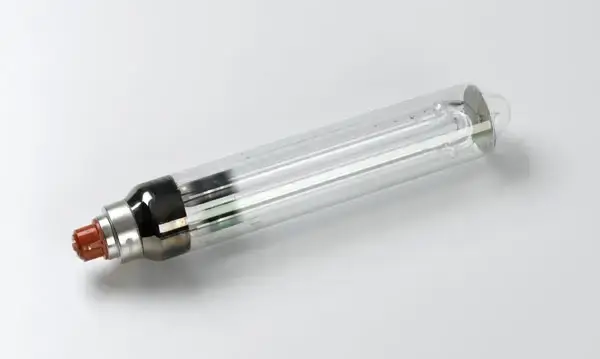
Low-pressure sodium lamps were first invented in 1920 by Arthur H. Compton at Westinghouse.
Fluorescent Lamp

In 1926, Jacques Risler, a French engineer, developed a coating for the interior of fluorescent lamps that absorbed the light produced by mercury and produced a visible light with a soothing hue.
Tube Light

The tube lamp, also known as a fluorescent lamp, was invented in 1927 by German inventor Edmund Germer. It is a low-pressure mercury vapor gas discharge lamp that produces visible light using the principle of fluorescence.
Laser Light

Theodore Maiman operated the first laser on May 16, 1960, at the Hughes Research Laboratories in California, by shining a high-power flash lamp on a ruby rod with silver-coated surfaces.
Visible LED Light

In the 1920s, Russian radio researcher Oleg Vladimirovich Lossev was studying the phenomenon of electroluminescence in diodes used in radio sets. In 1927, he published an article detailing his research titled "The Luminous Carborundum [Silicon Carbide] Detector and Detection by Crystals," and although he was unable to create a practical LED based on his work at the time, his research influenced future inventors.
Years later, in 1961, Robert Biard and Gary Pittman invented and patented an infrared LED for Texas Instruments. This was the first LED; however, since it was infrared, it was beyond the visible light spectrum. Baird and Pittman actually invented a light-emitting diode by accident while trying to invent a laser diode.
In 1962, Nick Holonyack, who was working as a consultant engineer at General Electric, invented the first visible-light LED. This was a red LED, and Holonyack used gallium arsenide phosphide as the substrate for the diode.Holonyack earned the honor of being called the "Father of the Light-Emitting Diode" for his contributions. He also holds 41 patents and his other inventions include the laser diode and the first light dimmer.

In 1972, electrical engineer M. George Craford invented the first yellow LED for Monsanto using gallium arsenide phosphide in the diode. Craford also invented a red LED that was 10 times brighter than Holonyack's.
Monsanto became the first company to mass-produce visible LEDs. Monsanto produced red LEDs used as indicators in 1968.
In 1976, Thomas P. Pearsall invented a high-efficiency and extremely bright LED for use in fiber optics and fiber telecommunications. Pearsall invented new semiconductor materials optimized for fiber optic transmission wavelengths. In 1994, Shuji Nakamura invented the first blue LED using gallium nitride.
High-Pressure Mercury Vapor Lamp
The first commercial high-pressure sodium lamps were introduced to the market in 1965 by companies in the United States, the United Kingdom, and the Netherlands. When a 400-watt lamp was introduced, it produced approximately 100 lumens per watt.
And we have reached the end of my blog on artificial light sources. This time, I felt a bit tired while writing, so I wanted to provide the information and wrap it up. As a Galaxy Explorer, I am delighted if I can inform you about space and other related topics in general terms! See you in my next blog!


